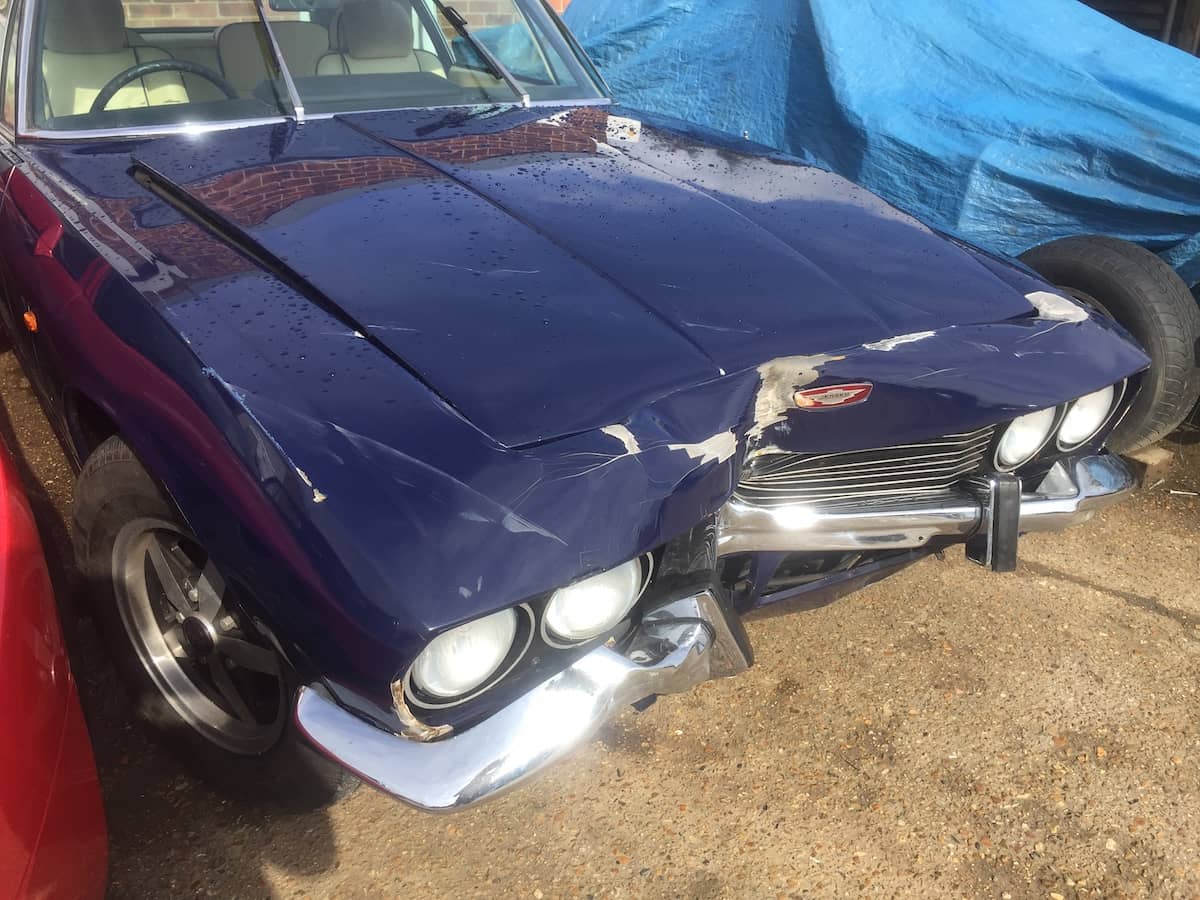
An insurance write-off happens when an insurer decides not to repair a damaged vehicle and instead settles the claim based on its pre-accident value.
That does not always mean the car is physically impossible to repair.
Some vehicles are written off because they are unsafe or beyond sensible repair. Others are repairable, but the insurer decides the cost of the work makes repair uneconomical.
In the UK, written-off vehicles are placed into one of four salvage categories: A, B, S or N.
The current categories are:
You can check the current government guidance on insurance write-offs on GOV.UK.
An insurer may declare a vehicle a total loss where repair is uneconomical or where the damage makes the vehicle unsuitable for repair.
For an economic write-off, the insurer considers factors such as:
This is why an older low-value car can sometimes be written off after relatively modest damage.
The same repair may represent a small percentage of the value of one car and most of the value of another.
Category A is the most severe classification.
The vehicle is considered unsuitable for repair and must be crushed in its entirety after the appropriate depollution and recycling processes.
A Category A vehicle cannot legally be repaired and returned to the road.
A Category B vehicle also cannot return to the road.
The structural body shell or frame is considered unsuitable for repair and must be destroyed.
However, suitable reusable components may be removed and used elsewhere.
Category S means the vehicle has sustained structural damage but is considered repairable.
This could involve damage to structural areas of the body or chassis.
A Category S car can potentially return to the road after being repaired to a roadworthy condition.
Because structural integrity is involved, the quality of the repair is particularly important.
Category N means the vehicle has been written off following non-structural damage.
This does not mean the damage is necessarily minor.
A Category N vehicle may still require expensive or safety-critical components such as suspension parts, steering components, brakes, airbags, electronic systems or lighting.
The distinction is that the structural frame or chassis has not sustained the type of damage that would put the vehicle into Category S.
Yes.
Both Category S and Category N vehicles can potentially be repaired and returned to the road, provided they are restored to a roadworthy condition.
Whether doing so makes economic sense is a separate question.
Before committing to a repair, consider the purchase or retention cost, parts, labour, paintwork and the vehicle's likely value after repair.
Our guide to whether a car is worth repairing after an accident looks at that decision in more detail.
No.
Category A vehicles must be destroyed completely.
Category B vehicles cannot return to the road because the structural shell or frame must be destroyed, although suitable parts can potentially be reused.
Depending on the category, insurer and individual claim, it may be possible to retain a repairable written-off vehicle.
If you are interested in keeping the vehicle, discuss this with the insurer before the salvage is disposed of.
The financial arrangement will depend on the insurer and the settlement offered.
Category A and B vehicles cannot simply be retained, repaired and put back on the road.
A repaired vehicle still needs to meet the normal legal requirements that apply to it, including being roadworthy and having a valid MOT where one is required.
A previous write-off category does not itself guarantee that a repaired car is safe simply because it can legally return to the road.
A thorough repair and inspection remain important.
Recorded insurance write-off status forms part of a vehicle's history and can affect how future buyers and insurers view it.
That commonly affects resale value, particularly for Category S and N vehicles.
For that reason, anyone repairing a written-off car should retain good documentation showing what damage occurred and what work was carried out.
A previously written-off vehicle can sometimes represent reasonable value, but the quality of the repair matters far more than the category letter alone.
Before buying one, try to establish:
A cheap Category S or N car with unknown repair history is not automatically a bargain.
White's Bodyworks can assess suitable repairable accident-damaged vehicles and advise on bodywork, structural repairs, welding and refinishing.
Whether a particular vehicle is worth repairing depends on the salvage category, extent of the damage, parts availability and total cost of the work.
For repairable collision damage, see our car accident repair service in Sussex.
If you are considering retaining or repairing an accident-damaged vehicle, send us photographs and details of the car so we can discuss the likely scope before you commit to the project.