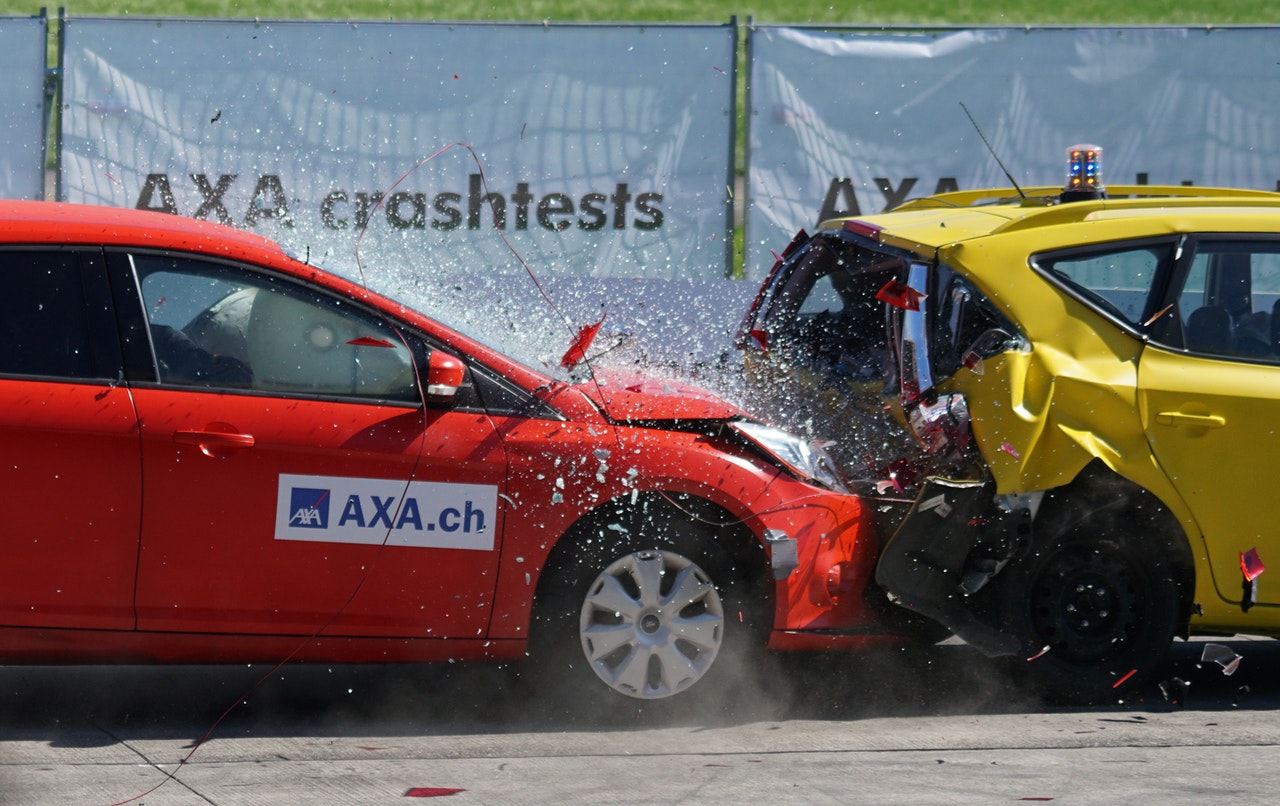
Whether a car is worth repairing after an accident depends on more than the size of the dent or the age of the vehicle.
The important questions are how badly the car has been damaged, what it will cost to repair properly, what the vehicle was worth before the accident and whether there are reasons to keep it that go beyond simple market value.
For a relatively new everyday car, the decision may be largely financial. For a cherished, unusual or classic vehicle, replacement may be much less straightforward.
This guide looks at the main factors worth considering before deciding whether to repair an accident-damaged car.
Start with the damage itself.
A damaged bumper, wing, door or isolated panel may be relatively straightforward to repair. A heavier impact can affect areas that are less obvious from the outside, including:
Visible cosmetic damage therefore does not always tell you whether a vehicle is economical to repair.
A proper assessment should establish the full extent of the damage before the decision is made.
Market value matters because there is a point where spending heavily on repairs may no longer make financial sense.
Consider the value of the car immediately before the accident rather than what you originally paid for it.
Age, mileage, specification, condition and service history can all affect that figure.
For an ordinary vehicle that can easily be replaced with an equivalent example, repair costs approaching its market value may make replacement the more practical option.
However, market value is only part of the picture.
Repair cost depends on the extent of the damage and what is required to return the vehicle to a safe and presentable condition.
Costs can include:
White's currently charges £65 per hour for fabrication/bodywork labour and £79 per hour for mechanical work, with paint, materials and parts additional where required.
For a fuller explanation of bodywork pricing, see our car body repair cost guide.
Where an insurance claim is involved, the insurer will decide whether repairing the car makes economic and practical sense.
If the vehicle is declared a total loss, it will be placed into a salvage category according to the type and severity of the damage.
Categories S and N can potentially be repaired and returned to the road if they are restored to a roadworthy condition. Category A and B vehicles cannot be returned to the road.
Our guide to insurance write-offs explains the categories and what they mean in more detail.
No.
An insurance write-off can happen because the cost of repairing the vehicle is considered uneconomical relative to its value, not necessarily because repair is technically impossible.
That distinction is particularly important with older vehicles.
A relatively modest amount of bodywork and paint can represent a large percentage of the market value of an inexpensive car. The insurer may therefore decide not to fund the repair even where the vehicle itself remains repairable.
Categories S and N specifically identify repairable vehicles.
A Category S vehicle has sustained repairable structural damage.
A Category N vehicle has been written off following repairable non-structural damage.
“Non-structural” does not necessarily mean trivial. A Category N car can still have safety-critical components that need replacement or repair.
Either category should be assessed carefully before deciding whether buying back or repairing the vehicle is worthwhile.
It can be, but the quality and extent of the structural repair are crucial.
You need to understand:
A cheap purchase price does not compensate for poorly repaired structural damage.
If you are considering retaining or buying a structurally damaged car, professional assessment before committing to the project is sensible.
Category N vehicles have not sustained damage to the structural frame or chassis as defined by the salvage code, but that does not mean the repair will necessarily be cheap.
Modern vehicles can have expensive lights, airbags, sensors, cooling systems and body panels. Several damaged components can make a car uneconomical for an insurer to repair even without structural damage.
Again, compare the total repair cost with the value and usefulness of the finished vehicle.
Usually, a recorded insurance write-off affects resale value.
Future buyers may be more cautious and may want evidence showing what damage occurred and how it was repaired.
That means a repair can make practical sense for a car you intend to keep while making less sense if the objective is simply to repair and resell it at a profit.
Keep photographs, invoices and other documentation relating to the repair where possible.
Market value does not capture every reason for keeping a vehicle.
Repair may still be worth considering where:
A well-known car with relatively low market value can sometimes be preferable to replacing it with another used vehicle whose history you do not know.
Classic vehicles are particularly difficult to judge using ordinary insurer economics.
Parts can be rare, restoration work labour-intensive and market values difficult to establish accurately.
At the same time, the owner may have spent years restoring the vehicle or have a personal reason for wanting to retain it.
That does not mean every damaged classic should automatically be repaired. Structural condition, parts availability and the realistic cost still matter.
But replacement value alone may not provide the whole answer.
Walking away may be the more sensible option where:
The money already spent on the car before the accident should not automatically determine what you spend afterwards.
The most useful information is a realistic repair assessment.
Photographs can provide an initial indication, but collision damage can extend behind panels or into mounting and structural areas that are not visible externally.
White's Bodyworks provides car accident repair in Sussex, including bodywork, structural repairs, welding and refinishing.
If you are deciding whether an accident-damaged vehicle is worth repairing, send us photographs and details of the car and we can advise on the most sensible next step.