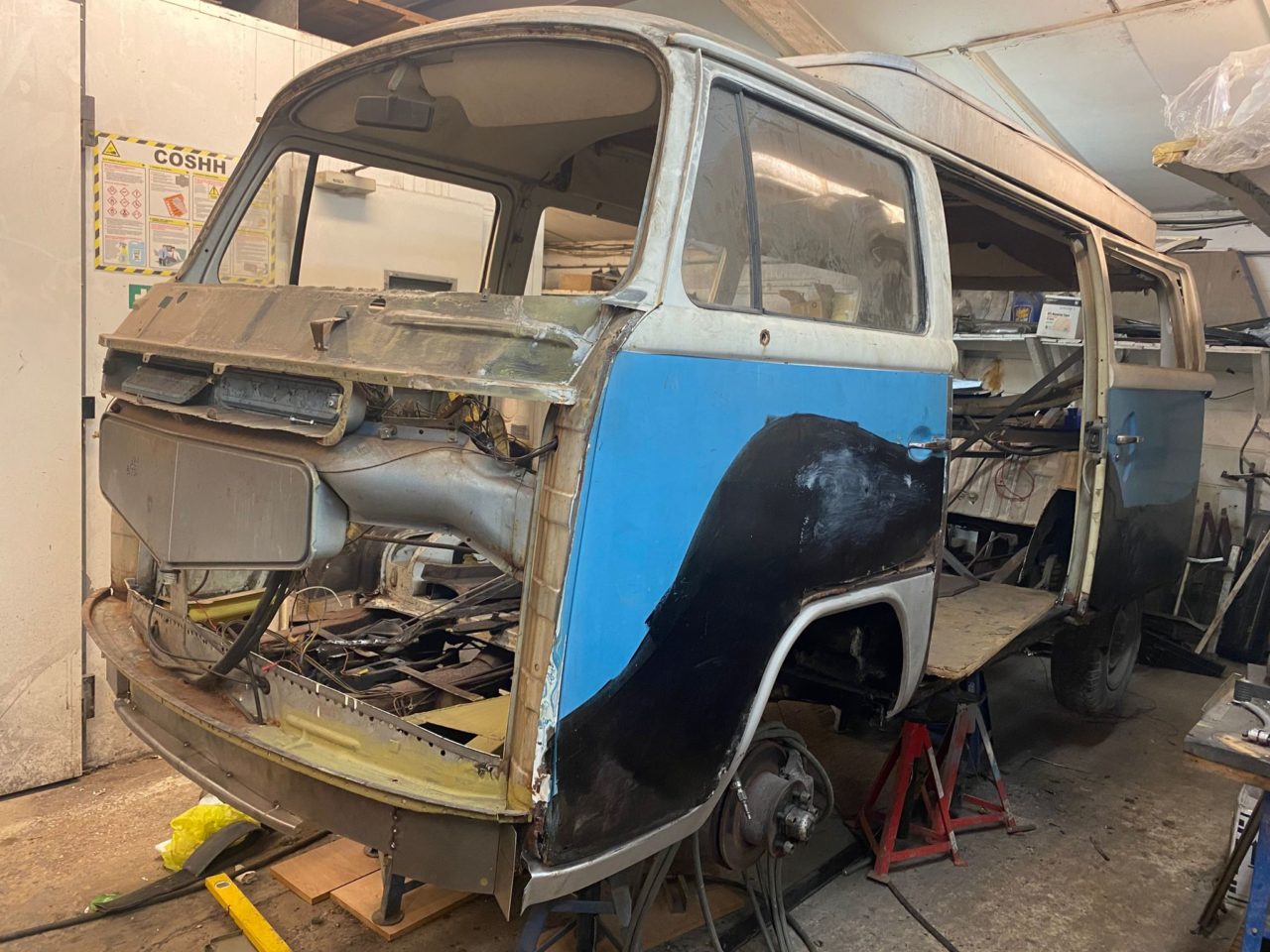
The VW camper van is one of those vehicles that carries more than just mechanical history. For a lot of people, it means holidays, festivals, family trips, long weekends and the sort of slower travel that modern cars don’t really encourage. They have a character that is hard to manufacture.
This one is in for restoration work, and like many older campers, it tells a story before you even start taking anything apart. These vans were built to be used. They carried people, luggage, camping gear, tools and sometimes half a household. Over the years, they’ve often been repaired, modified, repainted, patched and kept going by whoever owned them at the time.
That’s part of the charm, but it also makes restoration more involved.
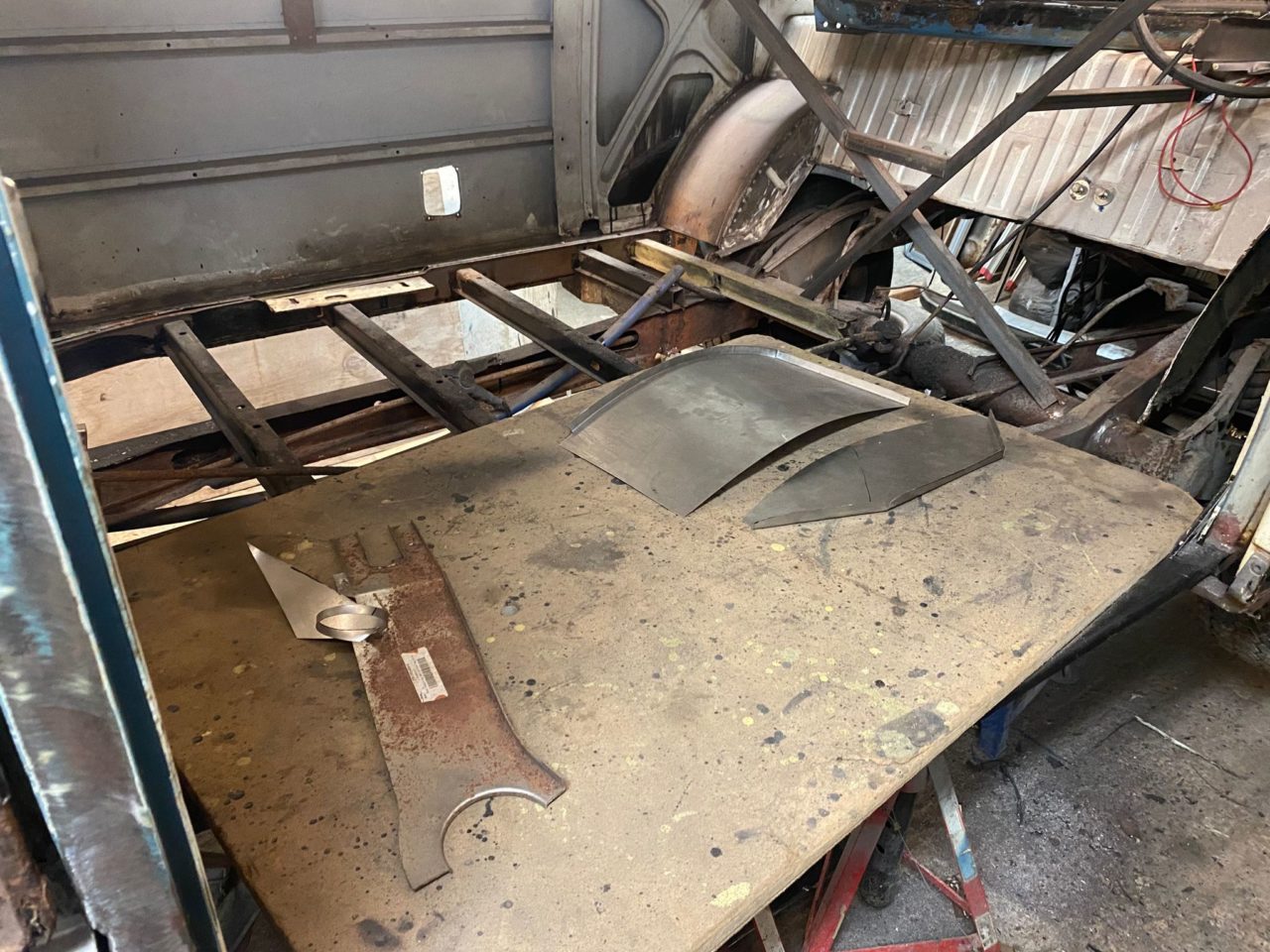
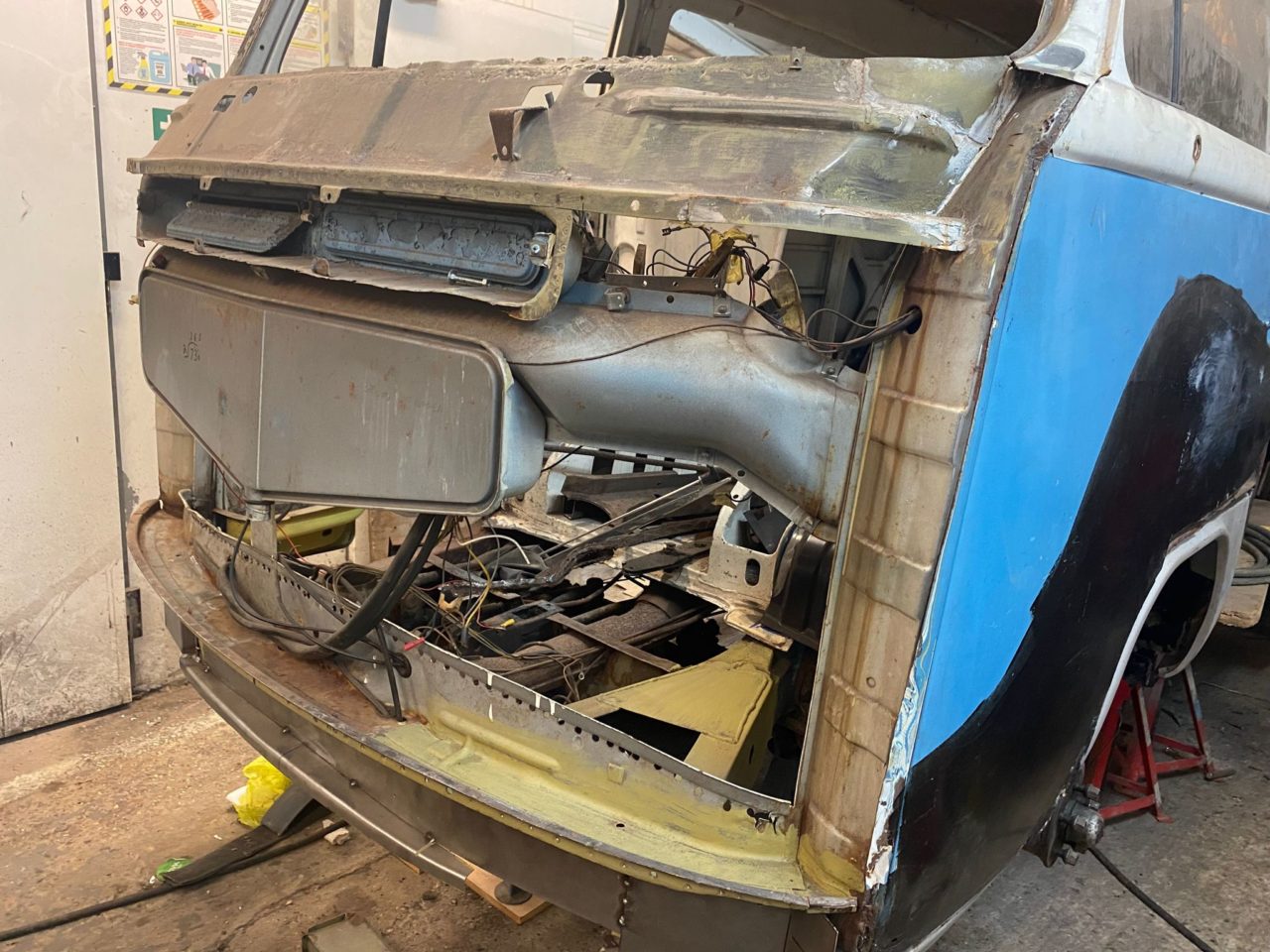
We often see VW campers with corrosion in the usual areas: lower panels, sills, wheel arches, seams, floors and around window apertures. Moisture has a habit of finding its way into the same places, especially where seals have aged or previous repairs haven’t been properly finished. From the outside, a section can look fairly harmless. Once you start opening it up, there is often more going on underneath.
At White’s Bodyworks in Hassocks, West Sussex, work begins with a proper assessment. There’s no point in rushing into painting or finishing work before the structure is understood. Any weak or corroded metal needs to be cut back to sound material, not covered over. Older repairs also need to be checked carefully. Some may be perfectly serviceable, while others may have to be undone and put right properly.
Panel work on a camper takes patience. The sides are large and relatively flat, so imperfections show up easily once the light catches them. Door fit, gaps, lower edges and seam lines all matter. Getting those details right is what makes the finished van look honest rather than hurried.
The aim with a restoration like this is not to make the camper feel artificial or overdone. These vans should still have warmth and character. They were designed for use, not display. The important thing is to make the body sound, the repairs durable, and the finish clean enough to do the vehicle justice.
In practice, camper restorations are rarely quick. You deal with one area, then the next reveals itself. That is normal. The right approach is steady, methodical work rather than chasing shortcuts.
This VW camper van is still in progress, but the direction is clear: restore the body properly, preserve the character, and give the vehicle the solid foundation it needs for many more years on the road.