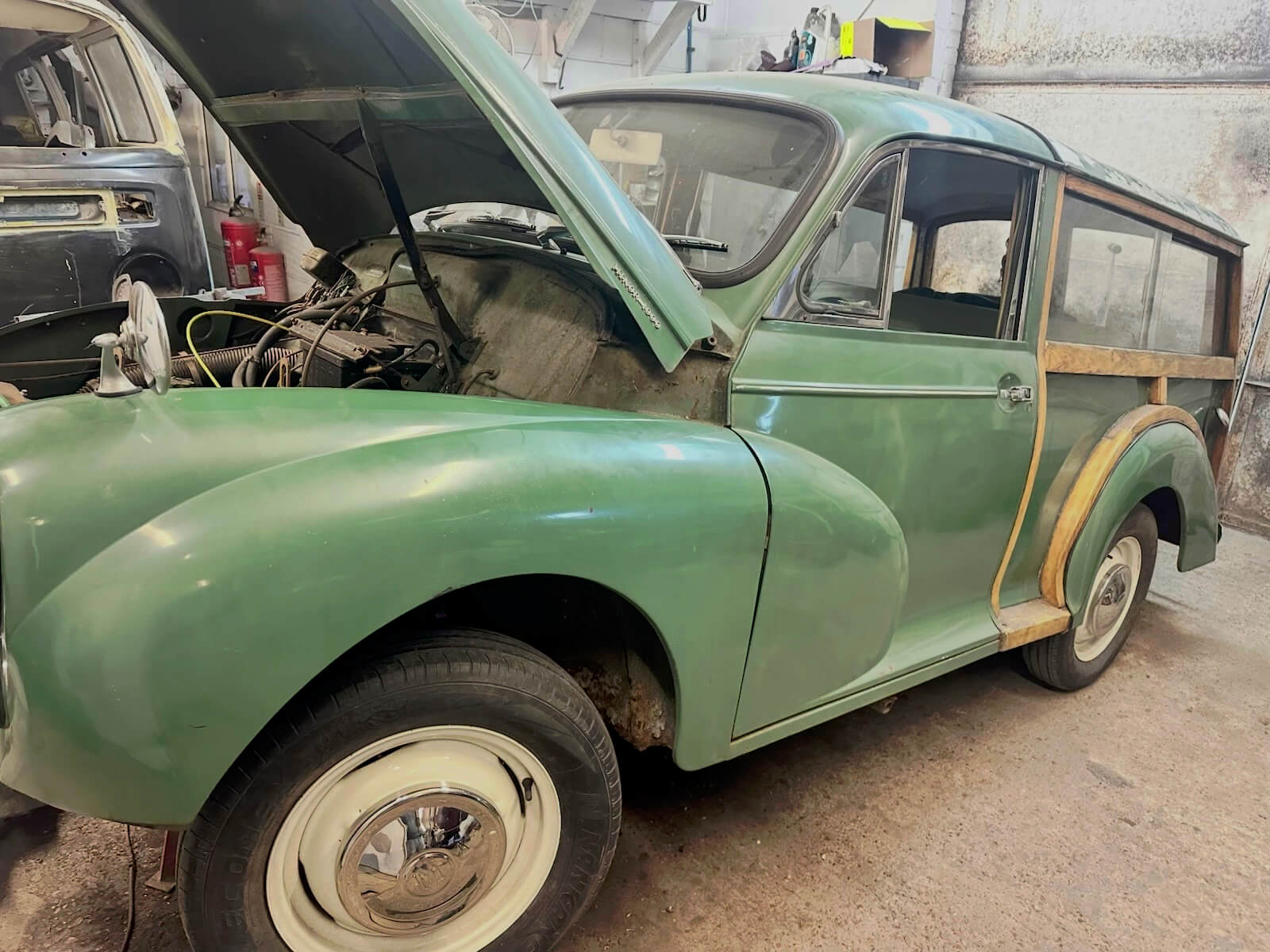
The Morris Minor Traveller is one of the most recognisable small classics on British roads. Practical, cheer ful and full of period charm, it has the sort of shape people remember immediately: rounded front wings, simple proportions and that distinctive timber-framed rear body that sets it apart from the saloon.
It was built as a useful little estate car, not a showpiece. Families used them, tradespeople used them, and many spent years doing exactly what they were designed to do. That everyday working life is part of the appeal now, but it also means corrosion and old repairs are very much part of the story.
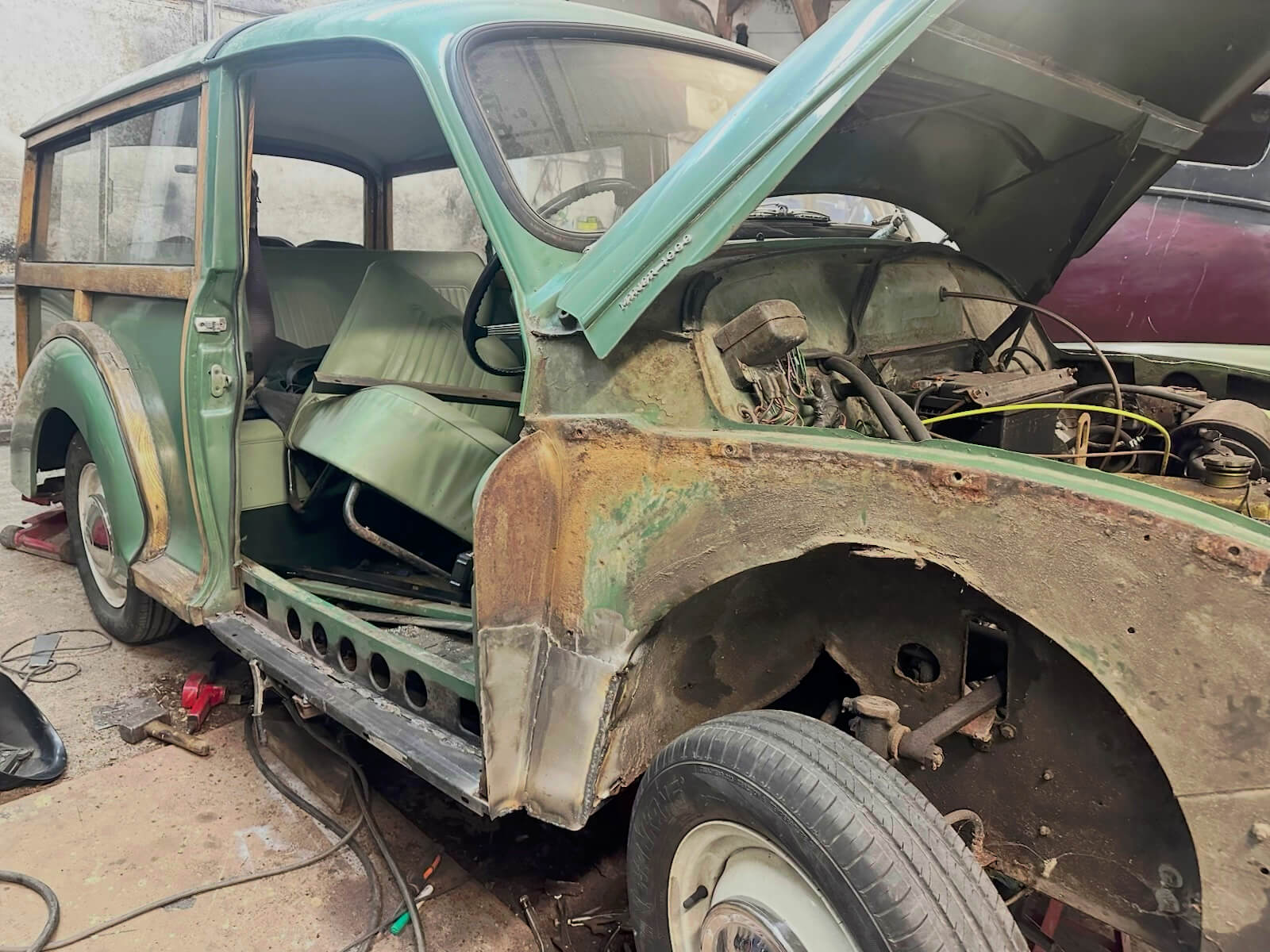
This Morris Minor Traveller is in for welding work, which is common on cars of this age. The visible bodywork may give some clues, but with a Traveller the important areas are often lower down and partly hidden. Sills, floor edges, inner arches, spring hanger areas, chassis legs and mounting points all need careful attention. Rust can also creep where metalwork meets timber or where moisture has been trapped over time.
We often see Travellers where previous repairs have been carried out at different stages of the car’s life. Some may still be perfectly sound. Others may have been done simply to keep the car roadworthy at the time. That is understandable, especially when these cars were once just old used vehicles rather than cherished classics. But once welding work begins, the old repairs need to be assessed properly.
At White’s Bodyworks in Hassocks, West Sussex, welding work starts with getting back to solid metal. There is no benefit in welding over thin, rusty or contaminated steel. The weakened areas need to be cut out, the surrounding structure checked, and new metal let in properly. On a classic like this, that process takes patience because the repair has to be strong without being heavy-handed.
The Traveller’s construction also means the work needs careful judgement. The rear timber frame is part of the car’s identity, but the steel structure beneath and around it still has to do its job. If the metalwork is weak, panel fit, door alignment and long-term durability can all suffer.
Most people don’t realise how much difference good structural welding makes to how an old car feels. It is not just about getting through an MOT or tidying up a rusty section. Solid metalwork gives the car a better foundation and helps prevent small problems becoming larger restoration work later on.
This Morris Minor Traveller is still in progress, but the aim is straightforward: repair the weakened areas properly, preserve the character of the car, and give it the strength it needs to keep being used and enjoyed.