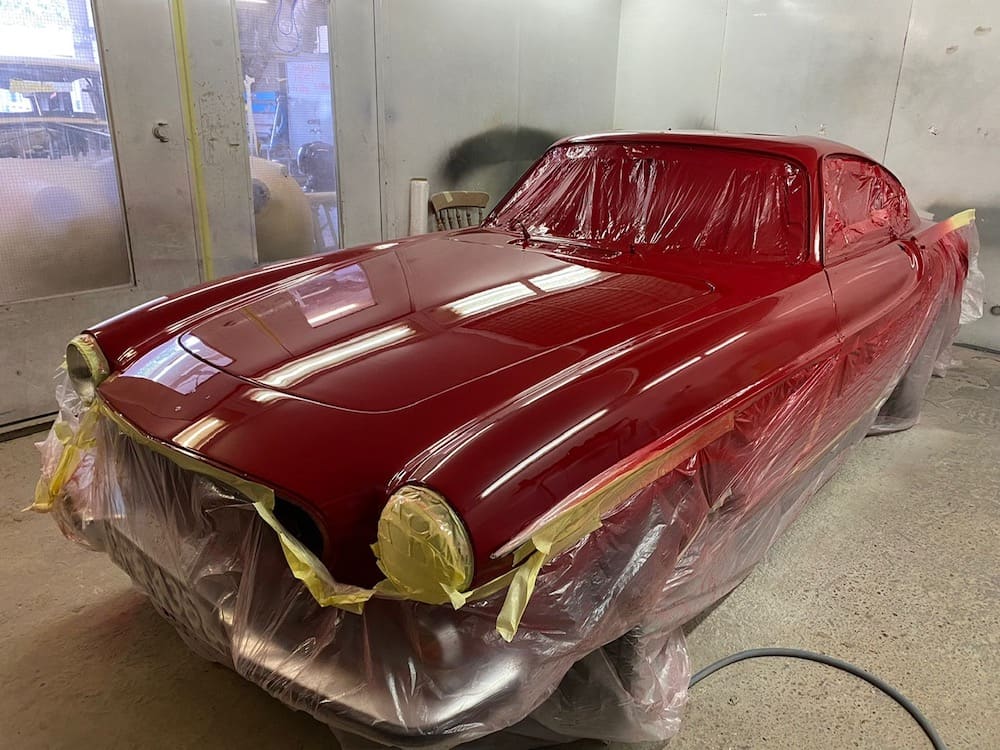
Repainting a classic car can transform a tired vehicle, protect repaired bodywork and return an older car to something much closer to its original appearance. But if originality and value matter, deciding whether to repaint is not always straightforward.
For some classics, damaged, faded or badly repaired paint is clearly holding the car back. For others, an older but largely original finish can form an important part of the vehicle's history.
Before committing to a respray, it is worth considering the condition of the existing paint, the originality of the car, the colour you intend to use and what you ultimately want from the vehicle.
Not necessarily.
A high-quality repaint can improve the appearance and desirability of a classic car where the existing paint is badly faded, damaged, corroded or has already been refinished poorly.
However, repainting can affect value where a car retains particularly good, historically important or highly original factory paint. On some rare vehicles, preservation of original finishes can matter more to collectors than achieving a cosmetically perfect result.
The effect on value therefore depends on the individual vehicle.
Factors worth considering include:
If you own an unusually valuable or highly original car, it can be worth obtaining specialist advice about preservation before removing original paint.
There are several situations where repainting can make good sense.
Sunlight, moisture, stone chips, scratches and age can eventually leave paint faded, cracked or failing.
Where the coating is no longer protecting the underlying bodywork properly, repainting may become part of preserving the car rather than simply improving its appearance.
Structural repairs, welding and panel replacement usually disturb the existing finish.
Once corrosion has been removed and new metal fitted, those areas need to be properly protected and refinished. On a car requiring extensive repairs, a wider respray can produce a more consistent final result.
If corrosion or damaged metal needs attention first, see our classic car welding service.
Many older vehicles have been repainted several times during their lives.
Previous work may include mismatched panels, excessive filler, paint reactions or colours that are noticeably different from the original specification.
Correcting poor historic repairs can therefore improve both the appearance of the car and the quality of the bodywork underneath.
Where a vehicle is already being stripped for substantial body and structural work, repainting often forms a natural part of the restoration.
For more extensive projects, our classic car restoration service covers structural repairs, fabrication, preparation, paint and reassembly.
If the original paint is still present and in reasonable condition, the decision becomes more nuanced.
Original paint can provide evidence of the vehicle's history and can be especially desirable on rare, unrestored cars. Small imperfections, fading or age-related marks may be considered acceptable if preservation is more important than cosmetic perfection.
That does not mean original paint should always be retained at any cost.
If the coating has deteriorated to the point that corrosion is developing or the surface can no longer be maintained properly, preservation of the underlying vehicle may become more important than preservation of the paint itself.
For many cars, the right answer lies somewhere between complete originality and a full cosmetic restoration.
It can.
Returning a classic to a documented factory colour will generally be easier to justify from an originality perspective than changing it to a colour that was never available on the model.
That does not mean a non-original colour automatically makes a car undesirable. Owners frequently choose a different period-correct or personally preferred colour, particularly where the vehicle is intended to be driven and enjoyed rather than preserved as an investment.
However, if future resale value matters, it is worth researching:
A complete colour change can also involve considerably more work than repainting a car in its existing colour because door shuts, panel edges, the engine bay and other less visible areas may also need refinishing.
Not every classic car needs to be stripped to bare metal.
If the existing paint is sound, stable and hiding no significant problems, it may be possible to prepare and refinish it without removing every previous coating.
A bare-metal respray becomes more appropriate where:
Removing the coatings exposes the true condition of the body, but it also increases the amount of labour involved and needs to be approached carefully.
Our classic car respray service includes both complete and more localised refinishing, depending on the condition of the vehicle and what the project requires.
Yes.
If the existing finish is otherwise sound, a damaged or repaired panel can often be refinished without repainting the entire vehicle.
The challenge is matching the new finish to paint that may be several decades old.
Even where the original paint code is known, age, sunlight and previous refinishing can alter how a colour appears. Matching and blending therefore become particularly important on older cars.
A partial repair can be a good option where preserving as much existing paint as possible is a priority.
There is no useful standard price because the preparation required varies enormously.
A structurally sound car with stable existing paint may require relatively straightforward preparation. A restoration project with corrosion, welding, replacement panels or poor previous repairs can require many more hours of bodywork before painting can begin.
As a broad indication, classic-car paintwork can run into several thousand pounds, with more extensive restoration-quality resprays costing considerably more.
If you are comparing costs, our separate car respray cost guide explains the main factors affecting professional respray prices.
A good respray does not have a fixed lifespan.
How long the finish remains in good condition depends on the quality of the preparation, the paint system used and how the vehicle is subsequently stored and maintained.
Cars kept dry, cleaned carefully and protected from prolonged exposure to moisture and sunlight will generally preserve their finish better than vehicles left outside year-round.
The condition of the underlying metal is equally important. Excellent paint applied over unresolved corrosion is unlikely to remain excellent for long.
Classic-car paintwork often requires more judgement than simply applying a modern factory colour to a replacement panel.
Before choosing a bodyshop, it is worth asking:
Price is important, but quotations are only genuinely comparable if the proposed preparation and scope of work are similar.
If the existing paint is badly deteriorated, the car requires significant body repairs or poor historic paintwork is compromising the vehicle, repainting can be a very worthwhile part of preserving and improving it.
Where a rare car retains good original paint, preservation may deserve greater consideration.
Most vehicles fall somewhere between those two extremes. The right decision comes down to the condition and significance of the existing finish, how the car will be used and what you want from the finished vehicle.
If you are considering repainting a classic and would like an experienced opinion on the condition of the bodywork, White's Bodyworks carries out classic car resprays in Sussex as well as wider restoration work.
Send us photographs and some information about the vehicle and we can discuss the options before you commit to a particular approach.