Shot blasting is a method of cleaning and preparing metal surfaces by propelling abrasive material against them at high speed.
In automotive repair and restoration, it can be used to remove rust, old paint, corrosion and other surface contamination from suitable components before welding, repair, coating or refinishing.
The term is sometimes used interchangeably with sandblasting or abrasive blasting, although the exact equipment and blasting media can vary considerably depending on the job.
At White's Bodyworks, blasting forms part of the wider preparation process for suitable restoration, repair and refinishing work. Our shot blasting service in Sussex covers a range of automotive components and restoration projects.
Shot blasting works by directing abrasive particles against a surface with enough force to remove unwanted material.
Depending on the equipment being used, the abrasive may be accelerated using compressed air or mechanically propelled. As it strikes the surface, it removes corrosion, paint, scale and other coatings while also leaving the material with a prepared surface suitable for the next stage of work.
The effectiveness of the process depends on several factors, including:
There is therefore no single blasting method that is appropriate for every component.
In automotive work, abrasive blasting is commonly used where old coatings or corrosion need to be removed before further repair or refinishing.
Typical applications can include:
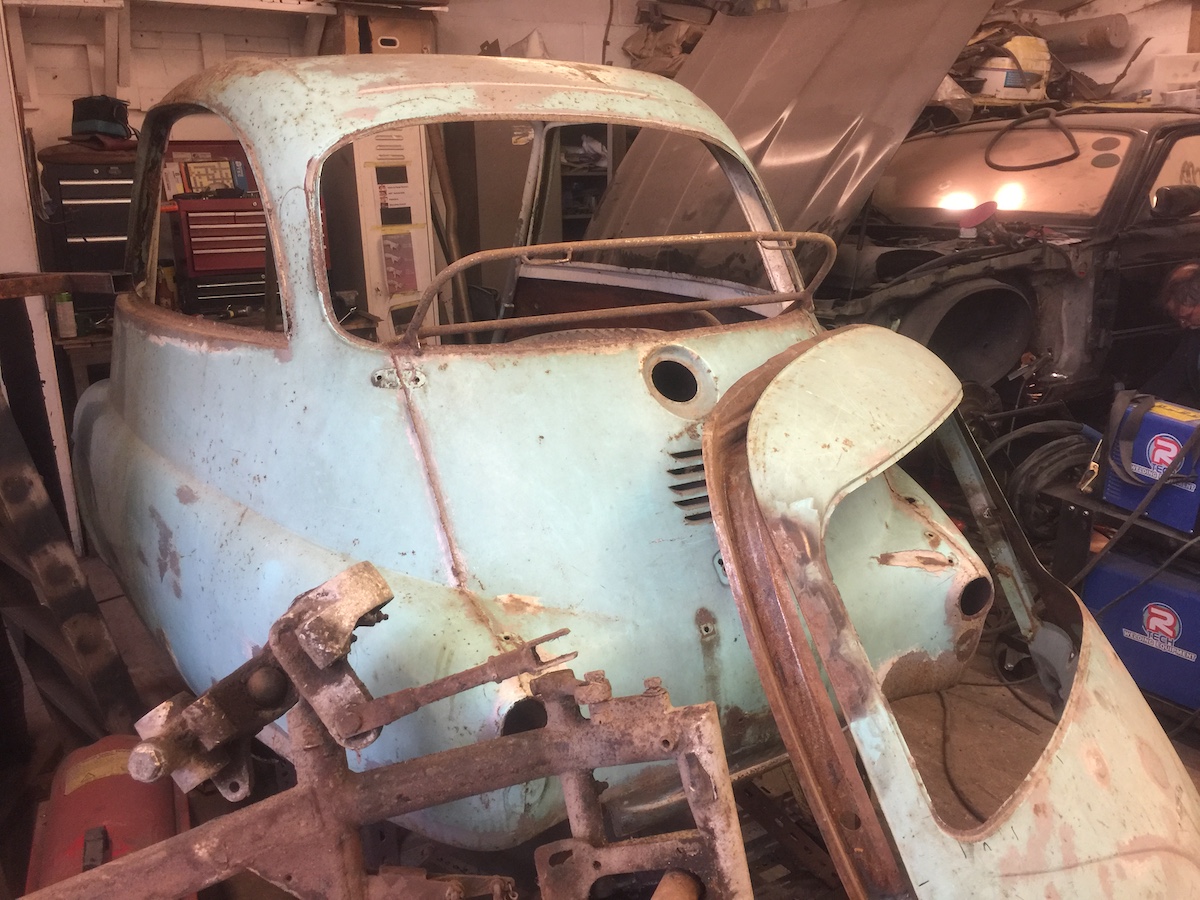
Removing old paint and corrosion can make it much easier to assess the true condition of the metal underneath.
That can be especially useful during classic car restoration, where layers of previous paint, underseal and older repairs may conceal problems that were not visible beforehand.
In everyday use, the terms shot blasting and sandblasting are often used fairly loosely.
Both describe abrasive surface-preparation processes, but the terms can refer to different media and different types of equipment.
Sandblasting traditionally refers to abrasive blasting using sand, although modern blasting frequently uses other media instead.
Shot blasting commonly refers to blasting with metallic shot or similar abrasive particles, particularly where a more aggressive cleaning action is required.
Abrasive blasting is the broader term and can include a variety of media and methods.
In practice, the important question is not simply what the process is called, but which blasting media and pressure are suitable for the material being treated.
Different blasting materials produce different levels of abrasion and different surface finishes.
Common media can include:
The appropriate choice depends on the component, the coating being removed and the finish required afterwards.
A heavy steel component covered in corrosion can tolerate a very different treatment from thin vehicle bodywork or a delicate restoration part.
Yes. Removing rust is one of the most common uses for abrasive blasting.
The process can strip surface corrosion and old coatings from suitable metal components, allowing the underlying material to be inspected and prepared for repair or protection.
However, blasting does not restore metal that has already been badly weakened by corrosion.
If rust has caused perforation, deep pitting or structural damage, further repair may be required once the affected area has been cleaned.
For classic vehicles, this can lead into welding and fabrication work where corroded metal needs to be cut out and replaced.
Yes. Abrasive blasting can remove paint, primer and other coatings from suitable surfaces.
This can be useful when a component has several layers of old finish or where the condition of the metal underneath needs to be assessed properly.
It can also provide a clean starting point before primer or another protective coating is applied.
The blasting method needs to be appropriate for the part being treated. Aggressive blasting that is perfectly suitable for a heavy chassis component may be inappropriate for a thin exterior body panel.
Some vehicle panels can be blasted, but thin sheet metal needs particular care.
Excessive pressure, heat or aggressive media can distort or damage lightweight panels. For that reason, the method used on a substantial chassis or suspension component should not automatically be applied to a bonnet, roof or door skin.
The condition, shape and thickness of the panel all need to be considered before deciding how best to remove old coatings.
On restoration projects, other stripping methods may be more appropriate for particularly vulnerable areas.
Bead blasting usually uses fine glass beads rather than more aggressive metallic abrasives.
It can provide a less aggressive cleaning action and a relatively uniform surface finish, making it suitable for some components where heavy material removal is unnecessary.
As with all abrasive blasting, suitability depends on the material and the result required.
Soda blasting uses sodium bicarbonate-based media propelled against the surface.
It is generally less aggressive than many conventional abrasive materials and can be useful for removing some coatings from surfaces where a gentler approach is desirable.
It is not automatically the best option for every automotive component, however. The surface may require additional cleaning or preparation afterwards depending on the coating system being applied.
Paint, primer and protective coatings rely on a sound surface underneath them.
If rust, loose paint or contamination is left behind, a new finish may look good initially but fail prematurely.
Blasting can help expose the true condition of the metal and create a clean surface before subsequent repair or coating.
It is particularly useful where the component has an uneven shape, corners or difficult areas that would be slow to prepare completely by hand.
Yes. Freshly cleaned steel can begin developing surface corrosion surprisingly quickly if it is left exposed, particularly in damp conditions.
Once blasting is complete, the component normally needs to move on to the appropriate repair, primer or protective coating stage without unnecessary delay.
What happens next depends on the project. A component may require welding, further fabrication, priming, painting or another protective finish.
It can be very useful, provided it is used selectively.
Classic cars often have decades of paint, corrosion, underseal and previous repair work hiding the original metal underneath.
Blasting suitable components can reveal their true condition and make it easier to decide what can be retained, what needs repairing and what should be replaced.
It can be especially useful on heavier structural parts, suspension components, brackets and other removable items.
For complete vehicle projects, blasting is only one stage within the wider restoration process. The condition of the vehicle and the type of component should determine whether blasting is the right approach.
The cost depends on what is being blasted, its size and condition, the coating being removed and the blasting method required.
A small removable component is very different from a large chassis or collection of restoration parts.
Heavily corroded items or parts covered in several layers of paint and underseal may also require more time than relatively clean components.
For an accurate price, it is normally best to provide photographs and dimensions or allow the item to be inspected first.
Blasting is normally a preparation stage rather than the end of the job.
Once the surface is clean, it can be inspected properly and the next steps decided.
These might include:
This is one reason blasting can work particularly well as part of a broader bodywork or restoration project rather than as an isolated process.
White's Bodyworks provides automotive shot blasting in Sussex alongside welding, fabrication, bodywork, paint and classic vehicle restoration.
We can advise whether abrasive blasting is appropriate for the component and how it should fit into the wider repair or restoration process.
If you have a chassis, frame, component or restoration project that requires cleaning and preparation, send us photographs and details of the item and we can advise on the next step.