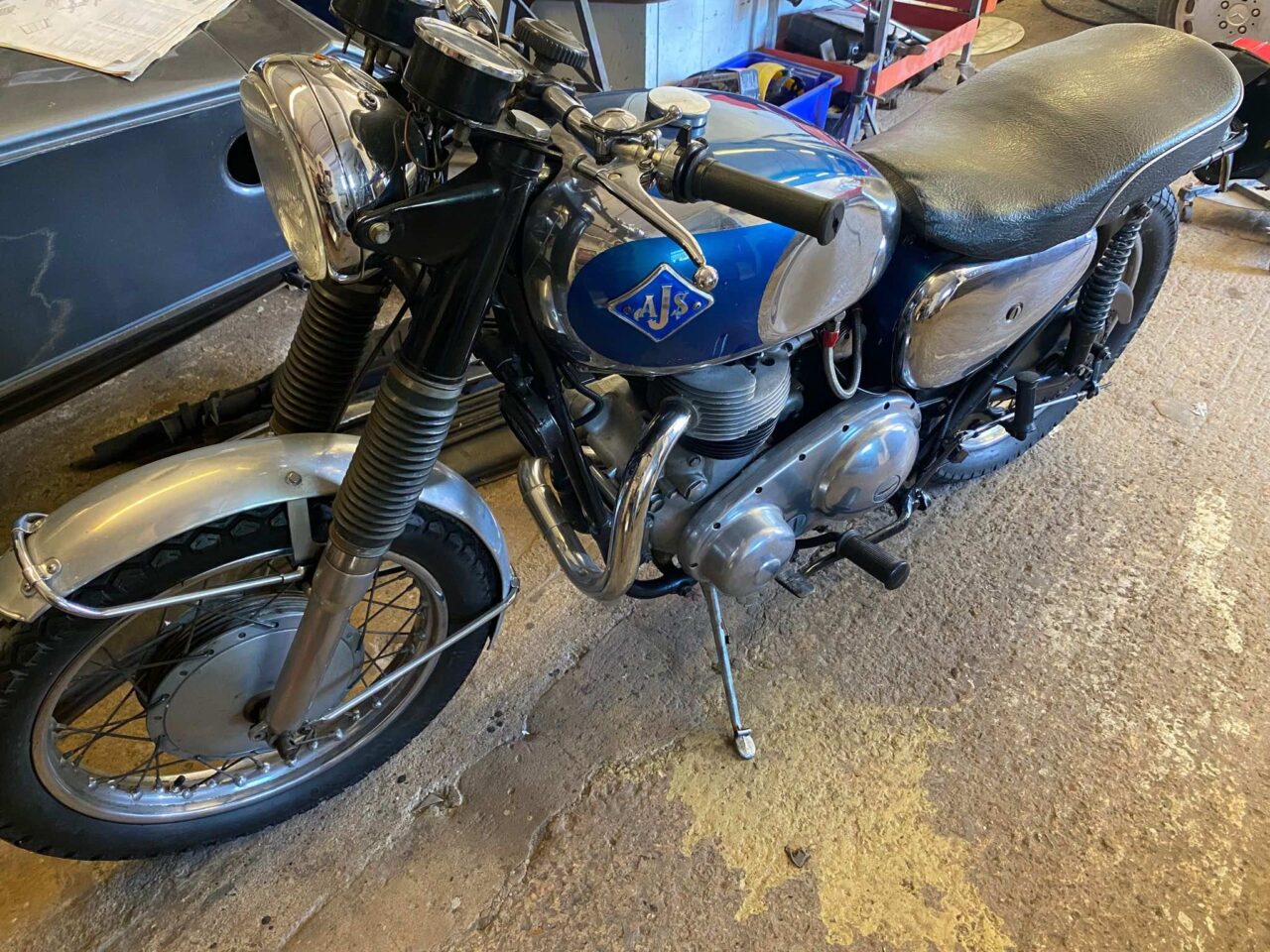
AJS motorcycles sit firmly in the traditional British motorcycling story. Built for everyday use, competition and long-distance riding depending on the model, they earned a reputation for straightforward engineering and solid performance. They weren’t overcomplicated machines, but they were built to do a job and keep doing it.
This particular AJS motorcycle is in for restoration and general repairs, the kind of work most older bikes eventually require if they’re going to remain usable rather than just stored away. Like many classics, it arrived running, but not at its best. That’s often the starting point.
We regularly see similar patterns with AJS machines. Engines that still turn over but feel tired, oil control that isn’t what it once was, and general wear across the drivetrain. None of it is unusual. Most of these bikes have had long lives, often with periods of use followed by long spells of inactivity.
In practice, that combination can be harder on a bike than steady use. Seals dry out, internal components settle, and older fuel systems don’t cope well with modern petrol if left standing. Electrical systems can also become inconsistent, especially where wiring has been altered over time.
At White’s Bodyworks in Hassocks, West Sussex, work like this begins with a broad assessment. Not just identifying obvious faults, but understanding how the bike behaves as a whole. On older British bikes, everything is fairly direct. If something is out of adjustment or worn, it tends to show up quickly in how the bike runs or feels.
Typical restoration and repair work on an AJS can involve attention to the engine, fuel system, and ignition, as well as the brakes, suspension, and general running gear. Carburettors often need careful cleaning and setup, while ignition timing and electrical connections benefit from proper checking rather than being assumed correct.
We often find that previous repairs have kept the bike going, but not necessarily brought it back to proper condition. Mixed parts, small adjustments made over time and general wear all add up. Sorting that out takes a more methodical approach.
The aim isn’t to modernise the bike or remove its character. AJS machines are meant to feel mechanical. They have a certain rhythm to how they run and respond. When everything is set up correctly, that character becomes part of the enjoyment rather than a limitation.
Restoration work is still in progress, but the direction is straightforward. Bring the bike back to a point where it starts reliably, runs cleanly and behaves as it should. Not over-restored, not overcomplicated, just properly sorted.
Keeping bikes like this going is less about chasing perfection and more about understanding how they were built and what they need to keep working.