There was a time when the phrase “classic car restoration” brought a fairly predictable image to mind. Chrome bumpers, carburettors, wire wheels, old British saloons, sports cars from the 1960s and the occasional pre-war vehicle tucked away under a sheet.
That world still exists, of course. It always will. But there is another group of vehicles now arriving in workshops with very similar problems, even if they look rather more modern at first glance.
Modern classics.
Cars from the 1990s and early 2000s are now reaching the age where they are no longer just used cars. Some are becoming collectable. Some are being restored properly for the first time. Others are simply worth saving because good examples are getting harder to find.
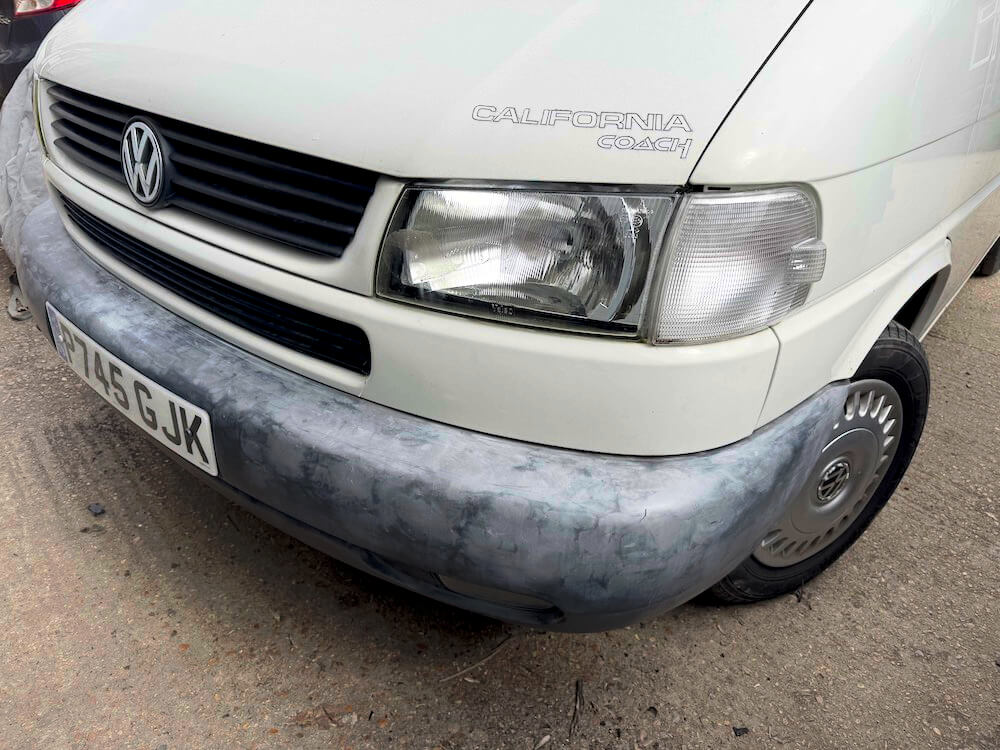
At White’s Bodyworks, we are seeing more of these vehicles needing the sort of attention once associated mainly with older classics. Honda S2000s, Mk1 Ford Focus RS models, VW T4 camper vans, Japanese performance cars, hot hatches, early BMWs, Mercedes models and everyday vehicles from the late 1990s are all starting to show their age.
And in many ways, they present a different challenge.
There is no exact moment when a car becomes a classic. It does not happen on a particular birthday. It usually happens when people start looking at it differently.
A car that was once cheap transport suddenly becomes desirable again. Owners stop treating it as disposable. Forums become more active. Good original parts get harder to find. Buyers start caring about paint quality, panel gaps, factory details and service history. Suddenly, the same car that might once have been patched up and moved on is worth repairing properly.
That shift can happen quickly.
The trouble is that many modern classics spent years in the awkward middle ground. Too old to be new. Too new to be cherished. During that period, they were often used hard, repaired cheaply and maintained just well enough to keep them on the road.
Now those shortcuts are starting to matter.
A lot of people assume modern cars do not rust like older ones. That is only partly true.
Better factory protection, improved paint systems and galvanised panels helped enormously, but they did not make cars immune. Once a vehicle has seen twenty or thirty British winters, corrosion finds its way into the usual places.
We often see problems around rear arches, sills, floor edges, subframes, suspension mounting points, front crossmembers, door bottoms and areas hidden behind plastic liners. The difficulty with many modern classics is that the corrosion is not always obvious. Covers, trims, underbody shields and arch liners can hide what is happening underneath.
From the outside, a car may look clean. Once the trim comes off, the story changes.
This is especially true on cars that have been used all year round. Road salt, standing water and trapped dirt do their work slowly. By the time rust appears on the visible panel edge, the inner structure may already need attention.
Many modern classics have already had paintwork or accident repairs at some point in their lives. That is not unusual. These cars were used, parked, bumped, scraped and repaired like any other vehicle.
The issue is whether the work was done well enough for the car’s current value and future.
A cheap repair on a ten-year-old used car might have seemed perfectly reasonable at the time. A quick blend, a bit of filler, a pattern panel, a budget respray on one corner. But when that same car becomes collectable, those old repairs stand out.
We often find uneven paint, poor colour matching, heavy filler, corrosion under repairs, badly sealed welds or panels that were never quite aligned properly. None of this is always obvious at first glance. It usually reveals itself during preparation.
That is why modern classic restoration needs careful assessment. You are not just repairing the car. You are often undoing years of previous decisions.
There is another assumption that catches owners out: because the car is not that old, parts must be easy to get.
Not always.
Some mechanical service parts are still available. Body panels, trim pieces, original bumpers, lights, interior parts and model-specific fittings can be much harder. Performance models are often the worst for this because they used unique parts that were not shared with the standard versions.
A Mk1 Focus RS, for example, is not just a normal Focus with different paint. A Honda S2000 is not just another Honda of its period. The details matter, and those details can be difficult or expensive to source.
This changes the way repairs need to be approached. If a panel, bracket or trim piece is rare, you do not want to damage it unnecessarily. If a section can be repaired properly, that may be better than replacing it with something that does not fit as well or is no longer available.
Modern classic work often involves the same judgement we use on much older cars: what can be saved, what must be replaced, and what needs fabricating carefully.
Modern classics often rely heavily on their original colour and finish. Think of the strong factory colours on performance models, metallic finishes on executive cars, or the deep gloss expected on a well-kept roadster.
A respray or paint repair has to respect that.
Good paintwork starts long before the final colour is applied. Panels need preparing properly. Old repairs need checking. Corrosion has to be removed, not hidden. Edges, shuts, trims and mouldings all need attention. With modern classics, the finish needs to be clean enough to suit the car without making it look over-restored or artificial.
That balance matters.
A classic from the 1950s can sometimes wear a little imperfection as part of its character. A modern classic often needs a sharper finish because that is how the car was designed to look. Poor paintwork, mismatched panels or visible repair lines can quickly spoil the whole car.
Modern classic owners often face a familiar question: should the car stay original, or should it be improved?
There is no single answer.
Some cars are now valuable enough that originality really matters. Factory paint, correct trim, original panels and period details all affect desirability. Others are owned because they are enjoyable to drive, and sensible improvements may make them more usable.
The important thing is to be honest about the goal before work begins.
If the car is being preserved as a collectable example, repair choices need to reflect that. If it is being built as a usable weekend car, the priorities may be slightly different. Either way, shortcuts are rarely helpful.
At White’s Bodyworks, we tend to look at the car first and the owner’s plans second. A vehicle should be structurally sound, properly repaired and safe before anyone worries too much about the finer details.
This is where the work becomes interesting.
Modern classics may have fuel injection, airbags, ABS, electronic modules and more complex interiors, but many of the repair skills are still traditional. Welding, fabrication, panel preparation, paintwork, corrosion repair and mechanical judgement all matter.
In some cases, the blend of old and new makes the job more involved. You may be dealing with rust around structural areas while also protecting wiring looms, sensors, trim clips and electronic components that are no longer easy to replace.
That requires care.
A modern classic cannot always be treated like a simple old car, but it should not be treated like a disposable modern repair either. It sits somewhere between the two.
The best time to repair a modern classic is before it becomes a major project.
A small bubble on an arch, a soft sill edge, a crusty crossmember or a poor previous repair can often be dealt with sensibly if caught early. Leave it too long, and the work becomes larger, more expensive and more difficult to keep original.
We see this often. Owners wait because the car still looks decent or drives well. By the time they decide to act, the hidden areas have moved on.
That does not mean every mark needs immediate restoration. It means proper inspection is worth having. Knowing what is there allows you to plan, budget and prioritise.
Modern classics are only going to become more important. The cars that enthusiasts grew up with in the 1990s and early 2000s are now becoming the cars they want to preserve. Some are performance models. Some are camper vans. Some are ordinary vehicles that have become rare simply because most were used up and scrapped.
That is how classic status often works.
Not every car needs to be exotic to be worth saving. Sometimes it is the familiar vehicles that disappear fastest.
Modern classics are entering a new stage. They are old enough to need proper restoration skills, but modern enough that owners can underestimate the work involved.
Corrosion, tired paint, hidden damage, previous repairs, scarce parts and structural issues all need to be taken seriously. These cars deserve more than quick patching, especially if they are going to survive well into the future.
At White’s Bodyworks, we see modern classics as part of the same wider story as older vehicles. They need honest assessment, careful repair and a practical understanding of how they were built.
Whether it is a Honda S2000, a Mk1 Focus RS, a VW T4 or another car just beginning to earn its classic status, the principle is the same.
Repair it properly now, and it has a much better chance of becoming the classic everyone wishes they had kept.