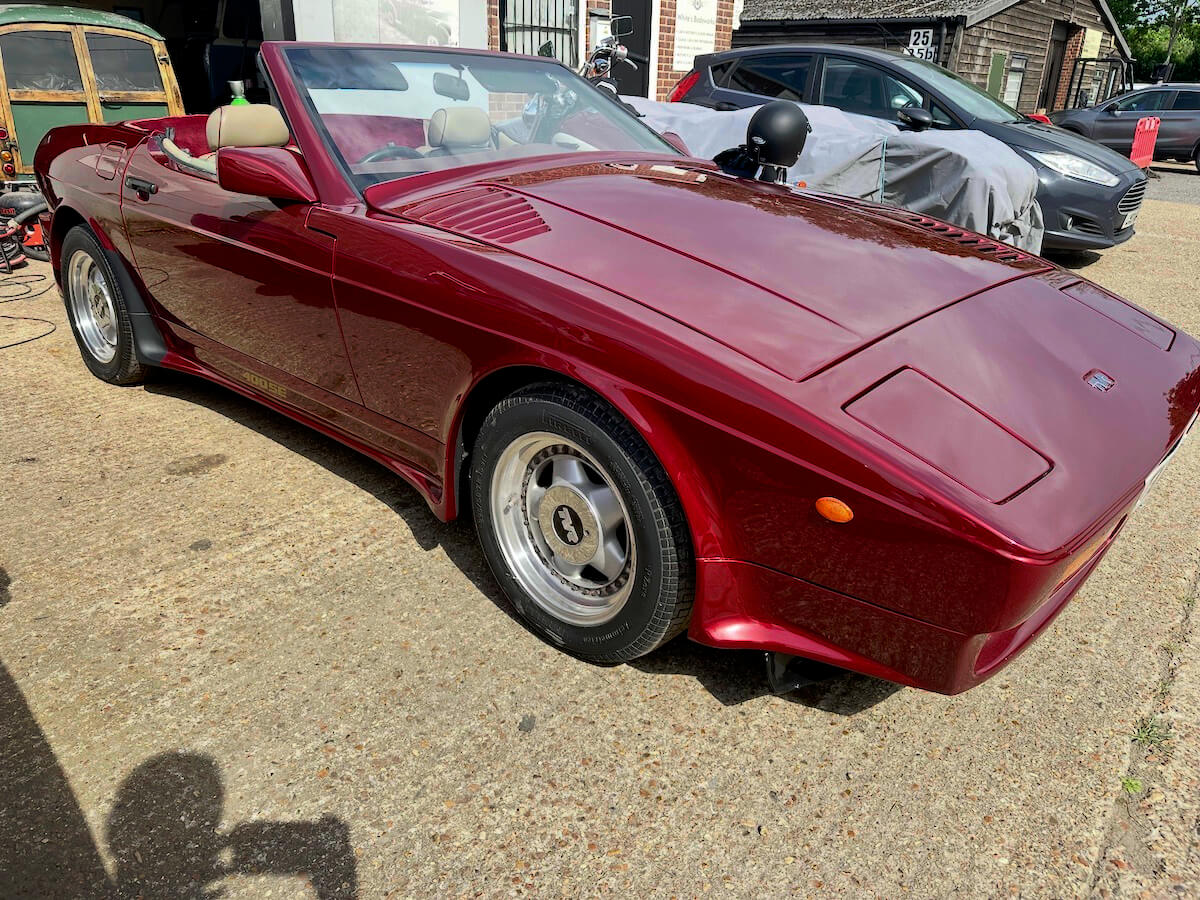
A good respray can completely transform a car. It can bring tired bodywork back to life, restore depth to faded paint and make a classic or modern vehicle look cared for again. But the part most people notice at the end is only the final stage of a much longer process.
The paint is what you see. The preparation is what decides whether it lasts.
That is the part of respray work that is often misunderstood. From the outside, it can seem simple enough. Sand the car down, mask a few areas, apply the colour and polish it up. In practice, a proper respray involves far more judgement than that, especially on older vehicles, classic cars and cars that have already had previous body repairs.
At White’s Bodyworks in West Sussex, we know that good paintwork is never just about paint. It is about what is underneath it.
There are plenty of reasons a car may come in for respray work. Sometimes the paint has faded badly after years of sunlight and weather. Sometimes the lacquer has failed, leaving cloudy or peeling patches across the surface. On older vehicles, the finish may have become flat, thin or uneven.
In other cases, the issue is not age alone. Scratches, dents, accident repairs, panel damage, corrosion repairs and previous paintwork can all leave a car looking patchy. One wing may be a slightly different shade from the door. A bonnet may have lost its gloss. A bumper may have been repaired in the past and no longer quite matches the rest of the car.
Classic cars present their own challenges. Many have been painted more than once during their lives, often by different people, using different materials, to different standards. What looks like one layer of old paint may actually be hiding repairs, filler, rust, primer, older colour and a few surprises in between.
That is why the first job is not to start painting. It is to understand the car.
Before any proper respray, the vehicle needs to be assessed carefully. The question is not simply, “What colour is it?” It is, “What condition is the body actually in?”
Panel fit needs checking. So do arches, sills, door bottoms, boot edges, bonnet edges, seams, previous repair areas and any places where corrosion is likely to appear. On classics, we are also looking for signs of old welding, heavy filler, cracking, bubbling or paint that has sunk over earlier repairs.
This stage matters because paint will not solve a structural or surface problem. It may hide it briefly, but not for long. If rust is still active underneath, it will come back. If filler has been applied too heavily, it may crack or sink. If the panel surface is unstable, the new finish will show it eventually.
A respray is only as good as the surface it is applied to.
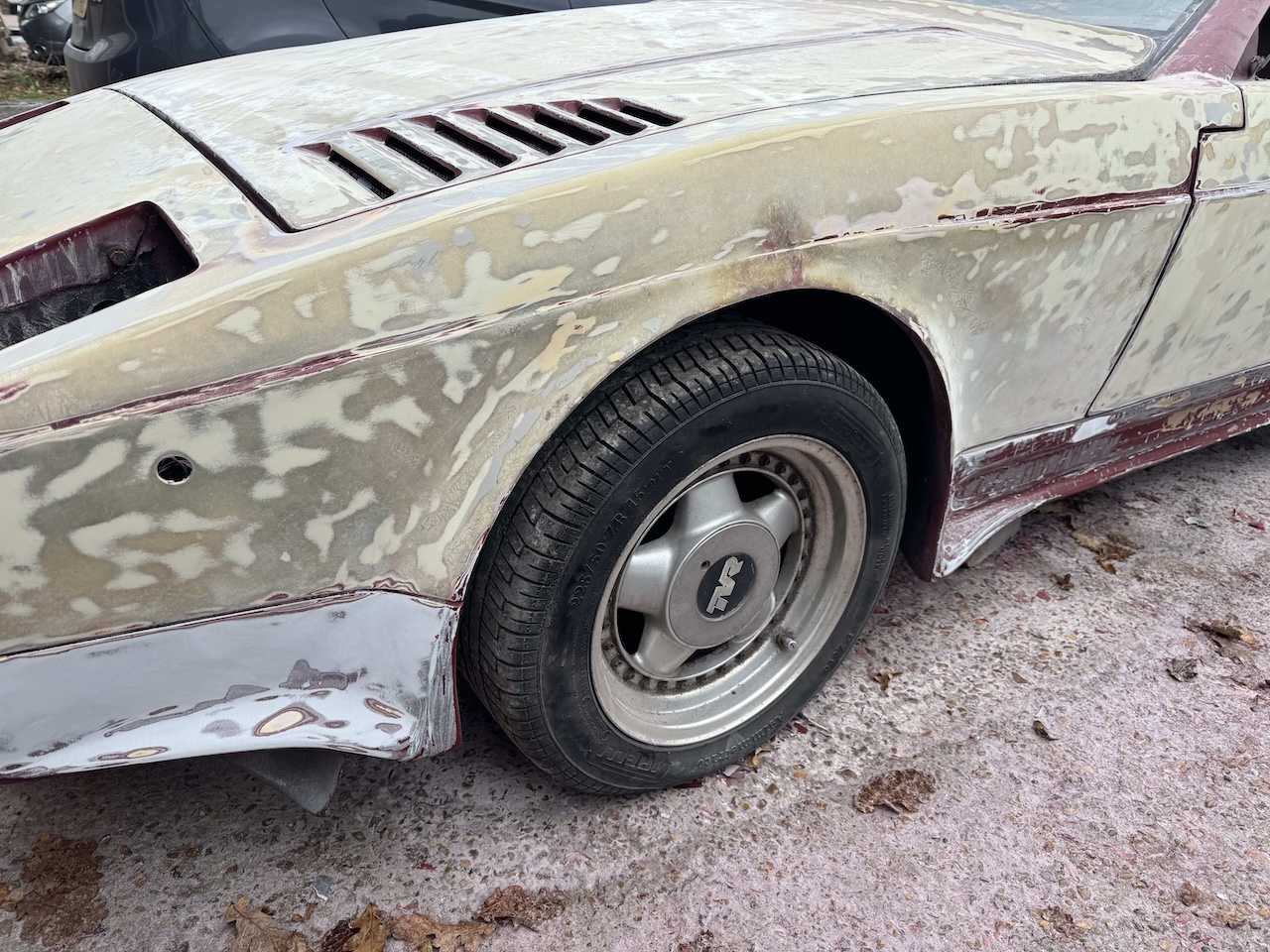
On some jobs, only certain areas need to be taken back. On others, particularly older classics or cars with unknown paint history, more thorough stripping may be needed. This is where the real condition of the car starts to reveal itself.
It is not unusual to find previous repairs under old paint. Some may be perfectly acceptable and can be worked with. Others may need correcting. We have seen patches that were never properly shaped, filler hiding dents that should have been repaired properly, corrosion trapped behind paint and areas where earlier work was done simply to get the vehicle through another few years.
That does not always mean someone has done a bad job. Many cars were once worth very little. A repair that made sense twenty years ago may not be good enough now that the car is being restored properly.
Once the surface is exposed, proper decisions can be made. Does the metal need welding? Can the panel be repaired? Is replacement the better option? Does an old repair need removing and starting again?
These are the decisions that shape the final result.
If there is rust, accident damage, cracked paint, dents or poor previous repair work, it needs dealing with before the respray moves forward. This may involve welding, fabrication, panel beating, filler work, sanding, alignment and careful shaping.
The aim is not simply to make the surface look flat for a few days. The aim is to create a stable base.
Good bodywork repair takes patience. Panel curves need to look natural. Swage lines need to stay sharp where they should be sharp. Door gaps, bonnet gaps and boot gaps need to sit correctly. If a panel is slightly wrong before paint, the finish will usually make it more obvious rather than less.
This is especially true on cars with simple, clean shapes. A Volvo P1800, MGB GT, Jaguar E-Type or classic Mercedes does not need loud styling to have presence. The lines do the work. That means the paint finish has to follow those lines properly.
Once repairs are complete, the preparation continues. Primer is applied to help build a consistent, workable surface, but that is not the end of it. The primer then needs sanding and blocking so the panel shape can be refined.
Blocking is one of those stages that customers rarely see, but it makes a huge difference. It helps remove small ripples, uneven areas and imperfections that would otherwise show through the final paint. It is slow, physical and sometimes repetitive work, but it is part of what separates a proper respray from a quick blow-over.
On a rushed job, this is often where time is saved. The problem is that the time saved usually comes back later as visible defects. Sink marks, sanding scratches, uneven reflections and edges that do not look quite right are all signs that preparation has been hurried or skipped.
A glossy finish can look impressive at first glance. Look along the side of the car in the right light, though, and the preparation tells its own story.
Colour matching is another important part of the process. Even when a car is being painted in its original colour, there can still be variation. Paint fades over time. Older paint codes may not always tell the whole story. Previous repairs may have shifted the shade across different panels.
For a full respray, the aim is consistency across the entire vehicle. For localised paintwork or panel repairs, the challenge is making the new paint blend into the existing finish so the repair does not stand out.
Classic cars can be particularly demanding here. Some owners want a factory-correct finish. Others want a sympathetic improvement that keeps the look of the car but gives it more depth and quality. Modern classics may need sharper, cleaner paintwork to suit the way the car was originally designed.
The right approach depends on the vehicle, its condition and what the owner wants from the finished result.
Masking is not the most glamorous part of a respray, but it is one of the areas where care shows. Poor masking can leave rough edges, overspray, hard lines and paint where it should not be. On older cars, trim, seals, badges and chrome may need removing where appropriate rather than simply masking around everything.
There is always a balance to strike. Removing trim can give a better finish, but fragile or rare parts need careful handling. Some clips, seals and fittings are no longer easy to replace. That is why experience matters. A good job is not just about enthusiasm. It is about knowing when to dismantle, when to protect, and when to proceed cautiously.
Edges, shuts, returns and awkward corners all need attention. These are the places people notice when they open a door, lift a bonnet or look closely at a finished car. A respray should not only look good from across a car park. It should still make sense when you get close.
A cheap respray can be tempting, especially if the car simply looks tired. The problem is that paintwork is one of those jobs where shortcuts are difficult to hide forever.
If rust is not removed properly, it returns. If filler is too thick, it can crack or sink. If panels are not prepared correctly, the finish may ripple. If masking is poor, the car can look untidy around the edges. If the wrong materials are used, durability can suffer.
Putting those issues right later often costs more than doing the job properly in the first place. In some cases, the new paint has to be stripped back before the real repair can begin. That means paying twice: once for the quick job and again to undo it.
Good respray work is not about making the job as complicated as possible. It is about doing the right work in the right order.
Not every car needs a full respray. Sometimes a local repair, panel paint or careful blending is enough. If the rest of the car is in good condition, targeted work may be the sensible choice.
A full respray makes more sense when the paint is tired across the whole vehicle, when repairs are spread across multiple panels, or when the owner wants the car brought up to a consistent standard. This is often the case with restoration projects, where body repairs, welding and paintwork are all part of the same process.
The honest answer depends on the car. That is why inspection matters. A quick opinion from photos can be useful, but it rarely tells the full story.
By the time the final paint is applied, much of the most important work has already happened. The repairs have been made, the surfaces prepared, the panels checked, the masking completed and the materials chosen.
Only then does the colour go on.
When it is done properly, the result should not just be shiny. It should look settled, balanced and right for the car. The reflections should sit cleanly. The colour should feel consistent. The details should not let the job down.
That is what a good respray gives you. Not just a new layer of paint, but a properly prepared finish that restores confidence in the whole vehicle.
For some cars, that means bringing a classic back to its former glory. For others, it means giving a modern vehicle a fresh lease of life after damage or age has taken the edge off it.
Either way, the principle is the same.
The paint is the part everyone sees. The work underneath is what makes it worth looking at.
If you are considering a respray for your car, contact the team at White’s Bodyworks today.