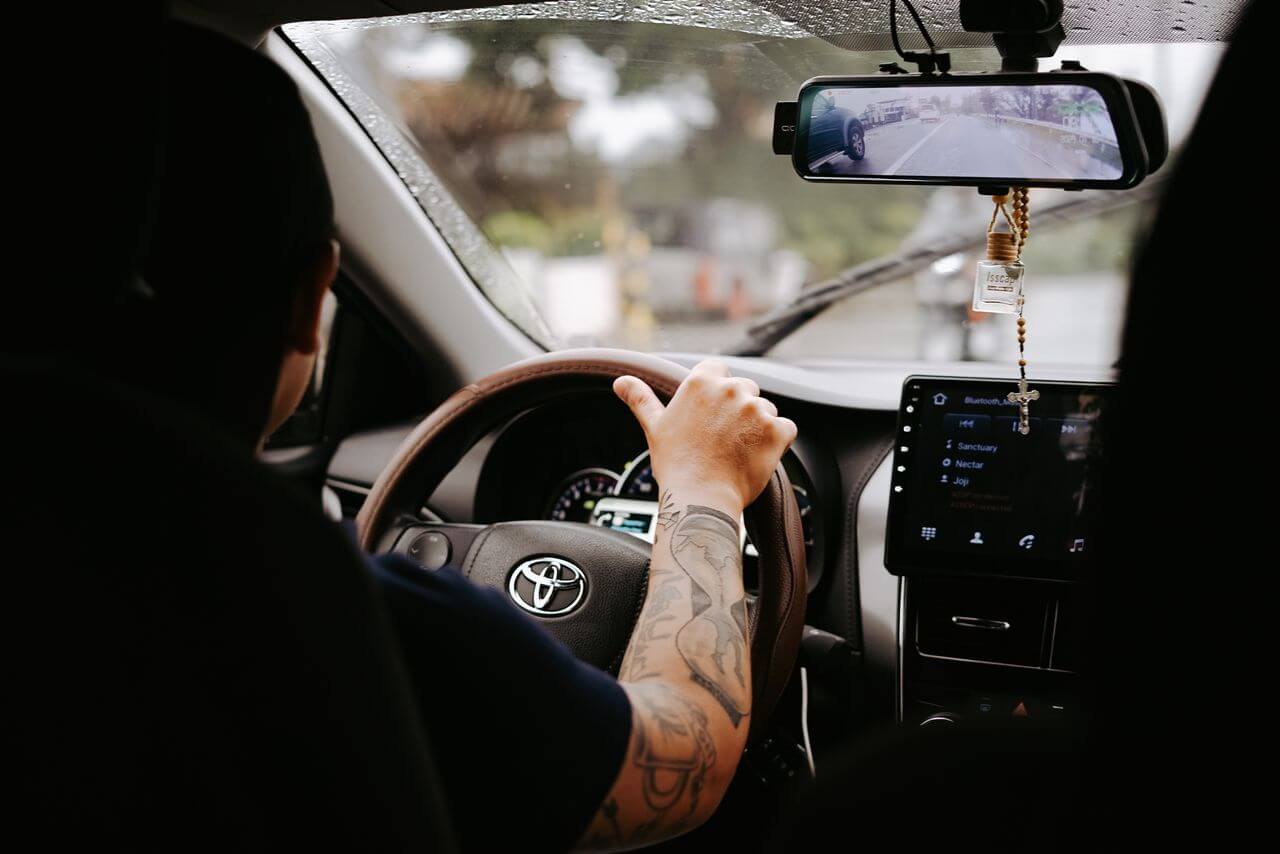
At White’s Bodyworks, we’ve seen quite a few of our customers installing dashcams in their cars and vans over the past few years, so we thought we’d take a look at whether it’s a great accessory or not.
Dashcams have gone from being a niche accessory to something you see in cars, vans and taxis every day. Some drivers fit them because they want protection after an accident. Others like the idea of recording bad driving, attempted fraud or damage while parked. For many people, it is simply another small bit of technology that offers peace of mind.
But is a dashcam actually worth having?
In many cases, yes. A good dashcam, fitted properly and used sensibly, can be very useful. It can show what happened in an accident, help with an insurance claim, and provide evidence when another driver’s version of events does not match reality.
That said, dashcams are not magic. They need to be installed correctly, maintained properly, and understood for what they are. Poorly positioned cameras can obstruct your view. Cheap units may record poor-quality footage. Parking mode can drain a battery if not wired correctly. Footage can sometimes work against you as well as for you.
Like most things in motoring, the value depends on the quality of the equipment, the standard of installation and how it is used.
We generally see cars after accidents, from minor bumper damage to more involved body repairs. A dashcam cannot prevent an accident, but it can make the aftermath clearer. And when there is damage to repair, clear evidence can help everyone understand what happened.
A dashcam is a small camera, usually mounted near the top of the windscreen, that records the road ahead while you drive. Some systems also include a rear camera, interior camera or parking mode, which records movement or impact when the vehicle is parked.
Most dashcams record on a loop. That means old footage is automatically overwritten once the memory card is full, unless the file is locked or saved. Many units detect sudden impact and protect that clip from being deleted.
More advanced models can include GPS, speed recording, audio, night vision, Wi-Fi transfer, app control and cloud storage. Whether you need all of that is another matter.
For most drivers, the basic job is simple: record clear, usable footage of the road in front of the car.
That is what matters most.
This is the biggest reason people install a dashcam.
After an accident, things can become confused very quickly. Drivers are shaken. Witnesses may not stop. Road positioning can change once vehicles are moved. One person may say one thing, another person may say something completely different.
A dashcam can cut through some of that.
If the footage clearly shows another driver pulling out, braking suddenly, changing lanes carelessly or driving into the back of you, it may help support your insurance claim. It can also help establish the sequence of events, which is often just as important as the final impact.
We often hear from motorists who are frustrated because they know what happened, but cannot prove it. A dashcam does not solve every dispute, but it can make a big difference when the footage is clear.
It is especially useful in situations such as:
In practice, footage is most useful when it shows the wider road situation, not just the moment of impact. That is why good positioning and image quality matter.
Insurance claims are not always straightforward. Even when you are confident you were not at fault, the insurer still needs evidence. If the other driver disputes responsibility, a claim can drag on.
Dashcam footage can sometimes help move things along.
A clear recording may support a non-fault claim, reduce argument between insurers and help show how the damage occurred. That does not mean every claim becomes simple overnight. Insurers still need to review the evidence, assess damage, check policy details and follow their process. But useful footage can remove a lot of uncertainty.
Some insurers may also offer discounts for dashcams, although this varies and should not be assumed. The bigger value is often not the small saving on a premium. It is the ability to support your version of events if something goes wrong.
Most people do not appreciate how important clarity becomes after a crash. A few seconds of clear footage can sometimes save weeks of argument.
Crash-for-cash fraud is less common than ordinary careless driving, but it does happen. Sudden braking, staged impacts and exaggerated claims can be very difficult to challenge without evidence.
A dashcam gives you a better chance of proving what actually happened.
It can show whether a vehicle stopped unnecessarily, whether brake lights came on, whether another driver reversed into you, or whether someone’s description of the incident is not accurate.
Even in less dramatic cases, footage can help protect against exaggerated versions of events. For example, another driver may claim you were travelling too fast, too close or in the wrong lane. If the footage shows otherwise, that matters.
The presence of a dashcam may also discourage some dishonest behaviour, although that is hard to measure.
Some dashcams include parking mode, which records when the car is parked and detects motion or impact. This can be useful if your car is damaged in a car park, outside your house or while left on the road.
We see plenty of damage where the owner has no idea what happened. A scuffed bumper. A dented wing. A cracked light. A scrape along a door. Often, the car was parked and the person responsible has driven off.
A dashcam with parking mode may capture a registration number, vehicle colour or the direction the other vehicle came from. Even if it does not capture everything, it can provide more information than having nothing at all.
That said, parking mode needs to be set up properly. If it is hardwired incorrectly, it can drain the battery. A decent installation should include proper fuse protection and, ideally, a voltage cut-off so the camera does not flatten the car if it is left for a few days.
This matters more on vehicles that are not used daily.
There is something about knowing your driving is being recorded that can make you more aware.
Some drivers find they become calmer, leave better gaps and think twice before reacting to poor driving around them. That is no bad thing. Roads would be easier if more people drove as though their decisions could be replayed later.
For parents of new drivers, a dashcam can also provide reassurance. Not as a way to spy on someone, but as a way to review incidents or near misses if they happen. The same applies to small businesses running vans or work vehicles, although commercial use brings additional data protection responsibilities.
In practice, a dashcam should not make you paranoid. It should make you more aware.
This is the part some people forget.
A dashcam records what happens. That includes your driving. If you were speeding, too close, distracted, aggressive or partly responsible, the footage may show that too. Police and insurers may review the whole clip, not just the part you think supports your case.
That does not mean you should avoid having a dashcam. It means you should drive properly.
We often see accidents where responsibility is not as simple as one person being completely right and the other completely wrong. Footage can reveal details neither driver fully noticed at the time.
The camera is not on your side. It is on the windscreen.
Placement is important. It needs a clear view of the road, but it must not obstruct the driver’s vision. The neatest position is often high on the windscreen, close to or behind the rear-view mirror, with the wiring tucked away properly.
Loose cables hanging down the dashboard are not ideal. Apart from looking untidy, they can interfere with controls, become distracting or get pulled accidentally.
A hardwired installation can be better than using a dangling power lead from a 12V socket, especially if you want parking mode. But it needs to be done properly. Poor wiring can cause electrical issues, blown fuses or battery drain.
With modern cars, extra care is also needed around airbags, sensors and trim panels. Running a cable behind the wrong area can create problems if an airbag deploys. That is why a careful installation matters.
A dashcam is only a small device, but poor fitting can still cause trouble.
A low-cost dashcam is better than nothing only if the footage is usable.
The problem with very cheap units is that they often struggle in the conditions where you most need them: night driving, rain, glare, low sun, fast-moving traffic and number plate capture.
If the footage cannot identify what happened, it may not help much.
Things worth considering include:
A front-only camera can be useful, but it will not show what happened behind you. A front-and-rear system gives a fuller picture, especially in rear-end impacts or motorway incidents.
That does not mean everyone needs the most expensive model. But the footage needs to be clear enough to be useful.
Dashcams write and overwrite data constantly. That is hard on memory cards. A cheap or old card can fail, sometimes without the driver realising. The result is that when footage is needed, it is not there.
It is worth using a high-endurance memory card designed for continuous recording. It is also worth checking every so often that the camera is actually recording and that the date and time are correct.
We often see car owners who fit accessories and assume they will work forever. Dashcams need occasional checking, just like tyres, lights and fluid levels.
A camera that stopped recording six months ago is only decorative.
For private motorists using a dashcam for personal driving, the practical privacy issue is usually simple: be sensible with footage.
Do not post clips online just to shame another driver. Do not share footage casually if it shows people, number plates or private locations. If the footage relates to an accident or possible offence, keep it safe and share it with the insurer, police or solicitor if needed.
For business vehicles, the situation is more involved. If dashcams record employees, customers, members of the public or other identifiable people as part of business use, data protection rules may apply. Businesses need to think about why they are recording, how footage is stored, who can access it and how long it is kept.
For normal private drivers, the key point is still worth remembering: dashcam footage can include personal data. Treat it with a bit of care.
Many dashcams record audio as well as video.
That can be useful. It may capture the sound of an impact, a horn, a conversation after an accident or your immediate reaction. But it can also record private conversations inside the car.
Some drivers prefer to turn audio off. Others leave it on. There is no single answer, but it is worth making a conscious decision rather than leaving the default setting without thinking.
If you regularly carry passengers, especially for work, audio recording deserves more thought.
A visible dashcam may attract attention, especially if the car is parked in public places.
Many modern units are small and discreet, but some are still obvious. If the camera can be removed easily, it may be worth taking it out when leaving the vehicle for long periods. If it is hardwired and fixed in place, choose a discreet model and avoid leaving other valuables on show.
The risk is not usually huge, but it exists.
On soft-top classics, camper vans or older cars with less secure cabins, this is worth considering carefully.
Yes, but with a few extra considerations.
Classic cars often have smaller windscreens, more visible interiors and different electrical systems. A large modern camera can look out of place. Wiring may need more care, especially on older electrical systems that were not designed with modern accessories in mind.
Some owners do not like the look of a dashcam in a classic. That is understandable. Part of the pleasure of an older car is the period feel.
A discreet, removable unit may be the best compromise. For owners who regularly drive valuable classics, a dashcam can provide useful protection without changing the car permanently. The installation should be sympathetic, reversible where possible and not harmful to trim or wiring.
As with most classic car decisions, it comes down to balance.
If you are involved in an accident and have dashcam footage, do not panic and start pressing buttons at random.
First, make sure everyone is safe and follow the usual accident steps. Stop, check for injuries, exchange details, take photographs and contact the police if required.
Then preserve the footage.
Many dashcams automatically lock impact footage, but it is still wise to check. If possible, save the file separately before it is overwritten. Avoid editing the clip. Keep the original footage intact, including the moments before and after the incident.
It is also sensible not to post the footage online. Share it with your insurer, the police or relevant professional advisers if needed. Online comments will not repair your car, and they may complicate matters.
The footage is evidence. Treat it like evidence.
For most modern daily drivers, a dashcam is a sensible addition if it is fitted properly and checked occasionally. It is not essential, but it can be useful when something goes wrong.
For high-mileage drivers, commuters, delivery drivers, business vehicles and anyone regularly driving in busy areas, the case is stronger. More miles means more exposure to risk.
For classic car owners, the answer depends on how the car is used. If the vehicle is valuable, regularly driven or used for longer trips, a discreet dashcam may be worthwhile. If the car is used only occasionally and originality matters most, the decision is more personal.
What matters is not simply having a dashcam. It is having one that records clearly, is positioned legally, does not interfere with driving, and is maintained well enough to work when needed.
A dashcam is like many things in motoring. Useful when done properly. A nuisance when done badly.
If you have been involved in an accident, whether you have dashcam footage or not, White’s Bodyworks can help assess the damage and advise on the repair work needed. From minor dents and paint repairs to more involved accident damage, we will take a proper look and explain what needs doing.
Bring the car in, show us the damage, and if you have footage, keep it safe. The camera may help with the claim, but the repair still needs experienced hands.