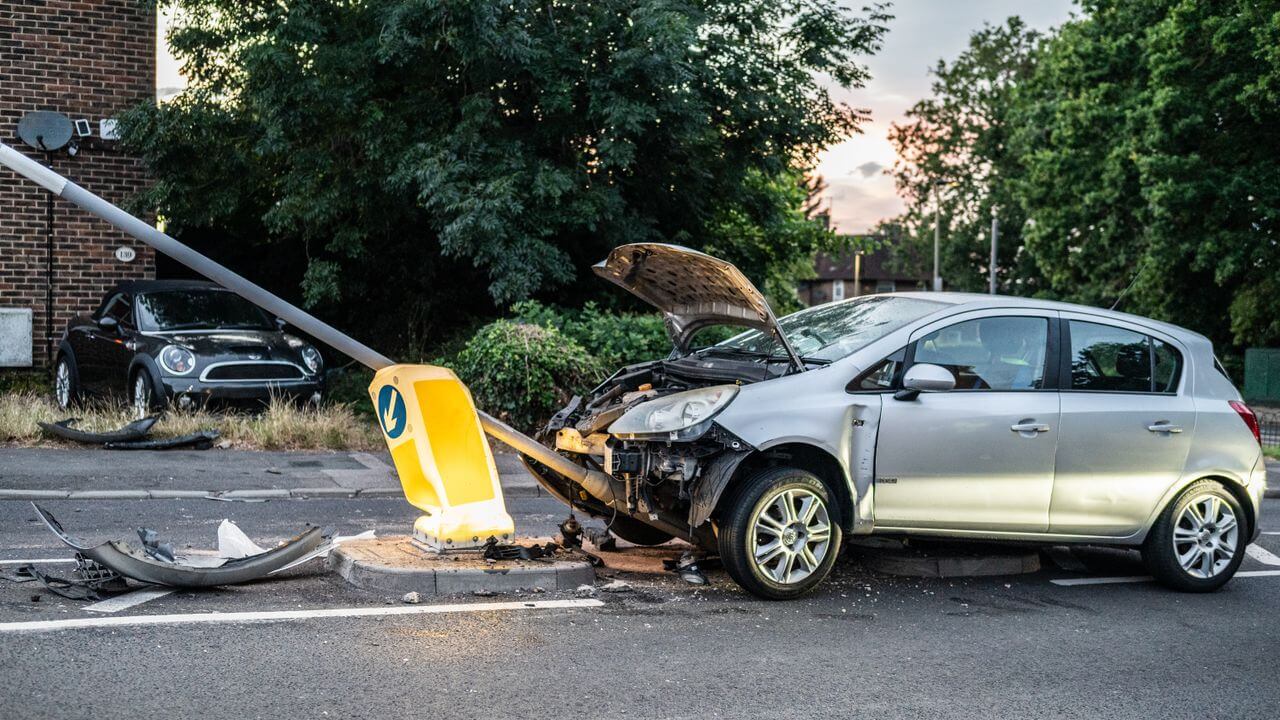
Most traffic accidents do not come out of nowhere. They may feel sudden when they happen, and from behind the wheel they often unfold in a second or two, but the causes usually start earlier. A driver looks down at the wrong moment. Someone follows too closely. A car pulls out from a junction without a proper second look. Tyres are worn, the road is wet, or a small mechanical issue has been ignored for too long.
At White’s Bodyworks, we see the aftermath rather than the accident itself. Damaged bumpers, bent wings, cracked lights, scraped doors, twisted panels and structural damage all tell part of the story. Sometimes it is obvious what has happened. A rear-end impact, a side swipe, a car park scrape. Other times, the damage only makes sense once the owner explains the road layout, the weather and what the other driver did.
Here are ten of the most common reasons traffic accidents happen, and why they matter.
Distraction is one of the biggest problems on modern roads. Phones are the obvious one, but they are not the only one. Sat navs, touchscreens, passengers, food, drinks, music, children in the back, even looking at something happening on the pavement can all pull attention away from the road.
Most people don’t realise how far a car travels in the few seconds it takes to glance at a phone. At town speed, it is enough to miss brake lights, a cyclist, a pedestrian stepping out or the car ahead slowing unexpectedly. On faster roads, the distance becomes much greater.
We often see accident damage that fits this pattern. Front-end impacts where the driver simply did not react in time. Low-speed bumps in traffic. Scrapes caused by drifting slightly out of lane. They may not always be dramatic accidents, but they are common.
Modern cars have more screens and alerts than ever. Some are useful. Some become another thing to look at. The safest approach is still the simplest: eyes on the road, hands on the wheel, and deal with everything else when stopped safely.
Speed is not just about exceeding the limit. A driver can be within the legal limit and still be going too fast for the road.
Wet roads, standing water, fog, bright low sun, loose gravel, sharp bends, rural lanes and heavy traffic all change what a safe speed looks like. In West Sussex, we have plenty of roads where the posted limit does not tell the whole story. Narrow lanes, hidden entrances, tractors, cyclists, horses and sudden bends all require a bit of judgement.
In practice, speed makes every mistake bigger. It gives the driver less time to react and increases the distance needed to stop. If there is an impact, the damage is usually worse.
From a repair point of view, higher-speed accidents often show themselves in deeper structural damage. Bumper covers are one thing. Reinforcement bars, chassis legs, suspension components and alignment issues are another. What looks like a straightforward front-end repair can become more involved once the vehicle is stripped and measured properly.
The right speed is not always the speed on the sign. It is the speed that suits the road in front of you.
Tailgating is one of those habits that creates accidents very quickly. The driver behind may think they are in control, but they have removed their own safety margin.
If the car in front brakes sharply, there is simply nowhere to go.
Rear-end collisions are some of the most common accidents we see. They happen in traffic, at roundabouts, near pedestrian crossings, on motorway slip roads and in stop-start queues. Often the driver behind says the car ahead “stopped suddenly”. Sometimes that is true. But drivers have to leave enough room for sudden stops, because sudden stops are part of real driving.
Even a low-speed rear-end impact can cause more damage than people expect. Modern bumpers are designed to absorb impact, but underneath there may be damage to brackets, crash bars, parking sensors, wiring, boot floors or rear panels. On older cars, the damage can transfer differently because the structure and bumper design are less forgiving.
Keeping a proper gap is not just polite driving. It is basic accident prevention.
A lot of accidents happen because someone did not look properly, or looked but did not really see.
Junctions and roundabouts are classic examples. A driver glances right, sees a gap, starts moving, then misses a cyclist, motorbike, pedestrian or car approaching from an unexpected position. At roundabouts, drivers often misjudge speed, lane position or whether another vehicle is actually leaving.
We often see side damage from these situations: front wing to door impacts, bumper corner damage, scraped quarter panels and wheel damage. The car that pulled out may only have moved a few feet, but that is enough.
The problem is that looking becomes routine. Drivers familiar with a junction can start to assume what will happen. They know the road, they know the traffic pattern, so they stop properly looking. That is usually when something unusual appears.
Motorcycles are particularly vulnerable here. They are smaller in the field of vision and can be hidden by pillars, parked vehicles or the angle of the road. A second look can make all the difference.
Driving is partly about controlling your own car and partly about reading everyone else.
Accidents happen when drivers assume another person will behave predictably. They assume a car will stop. They assume someone is turning because an indicator is on. They assume a vehicle will stay in lane. They assume a driver has seen them.
Those assumptions do not always hold.
In practice, we see plenty of damage caused by hesitation, confusion or poor judgement rather than outright recklessness. Two cars move at once in a car park. One driver waves another through, but someone else has not seen the signal. A car changes lanes as another vehicle accelerates into the gap. Someone starts reversing while another car is already moving behind them.
These are not always high-speed accidents, but they are frustrating and often avoidable.
The safest drivers leave room for other people to be wrong. That may sound pessimistic, but it is realistic. Expecting perfect behaviour from strangers in traffic is not a good plan.
Drink and drug driving remains one of the most serious causes of road accidents.
Alcohol affects judgement, reaction time, coordination and confidence. Drugs can do the same, whether illegal substances or certain medicines that cause drowsiness or slower reactions. The danger is not only extreme impairment. Even a small reduction in concentration can matter when something unexpected happens.
One of the problems with impairment is that it often makes the driver feel more capable than they are. They may drive faster, take smaller gaps, react later or fail to notice hazards.
The damage from drink or drug-related accidents is often more severe because reactions are slower and braking may come too late. We see vehicles where the impact angle or force suggests the driver had little time or ability to correct before the collision.
There is not much nuance here. If you are driving, do not drink. If medication affects your alertness, check whether you should be behind the wheel. A car can be repaired. The consequences of impaired driving can be far more permanent.
Tired driving can be just as dangerous as people think drink driving is, but it is easier to justify to yourself.
A driver feels tired but tells themselves they are nearly home. They open the window, turn the radio up, have a coffee and press on. Sometimes they make it. Sometimes they don’t.
Fatigue slows reactions and reduces concentration. It also affects judgement. Drivers may drift within their lane, miss signs, brake late, forget mirror checks or fail to process what is happening ahead.
Long motorway journeys are an obvious risk, but fatigue also affects local driving. Early mornings, late evenings, shift work, poor sleep, long days and stressful commutes all play a part.
From a workshop perspective, fatigue-related accidents can look like distraction. A vehicle runs into the back of another. A car clips a kerb. Someone drifts into another lane or off the road. The damage may not reveal the cause, but the pattern is familiar.
Stopping for ten minutes can feel inconvenient. It is still better than needing recovery, repairs and an insurance claim.
Rain, ice, fog, spray and low sun all contribute to accidents. Not because the weather crashes the car, but because drivers fail to adjust properly.
Wet roads reduce grip. Standing water can cause aquaplaning. Ice can make steering and braking almost useless. Fog reduces visibility. Low winter sun can blind a driver at exactly the wrong moment. Mud on rural roads is another local issue, especially around lanes used by farm traffic.
In West Sussex, road conditions can change quickly. A main road may be dry and clear, while a shaded lane nearby remains damp, greasy or covered in debris. After heavy rain, potholes and standing water can appear where drivers do not expect them.
Weather-related accidents often involve loss of control, late braking or sliding into another vehicle. The damage might be to corners, wheels, suspension, bumpers or side panels.
The answer is not complicated, but it does require discipline. Slow down, increase the gap, use lights properly, avoid harsh inputs and make sure tyres are in good condition before the weather turns bad.
Not every accident is caused by driving behaviour. Sometimes the vehicle itself is not in the condition it should be.
Worn tyres, weak brakes, faulty lights, tired suspension, poor wheel alignment, cracked windscreens, defective wipers and underinflated tyres all increase risk. A car may still move and feel mostly normal, but that does not mean it is safe.
We often see damage where the vehicle’s condition may have made things worse. A car that could not stop quickly enough. A tyre that had little grip. A suspension issue that affected control. Lights that made the vehicle harder to see.
The trouble is that wear builds gradually. Drivers get used to it. Brakes become softer over time. Tyres wear down slowly. Suspension knocks become background noise. Wipers smear for weeks before anyone replaces them.
Regular servicing and checks are not just about passing an MOT. They are about keeping the car predictable when it matters. The MOT is a minimum legal standard at one point in time. It does not mean the car will remain safe without attention until the next test.
Impatience causes a lot of bad decisions.
A driver overtakes where they should not. Pushes through a gap. Accelerates towards a closing lane. Forces their way out of a junction. Races amber lights. Refuses to let someone merge. Gets annoyed, reacts emotionally, and drives as though saving ten seconds is worth the risk.
It usually isn’t.
Aggressive driving creates accidents because it reduces margin. Everything becomes tighter: gaps, braking distances, lane changes, reaction time. Other road users are forced to react to the aggressive driver’s choices.
The resulting damage can vary from small scrapes to serious impacts. We see side swipes from rushed lane changes, front-end damage from late braking, and corner impacts from drivers trying to squeeze through spaces that were never really there.
Most people are not aggressive all the time. Often it is one moment of frustration. But one moment is enough.
A calm driver is usually a safer driver. Not slower, necessarily. Just more measured.
Traffic accidents are rarely random. Most come from familiar causes: distraction, speed, poor observation, impatience, tiredness, bad weather, poor judgement or vehicles that are not in the condition they should be.
The positive side is that many of these risks can be reduced. Not eliminated completely, because roads are unpredictable, but reduced.
Drive with space. Look properly. Keep the car maintained. Slow down when conditions demand it. Leave the phone alone. Do not drive tired or impaired. Give other people room to make mistakes.
And if the worst does happen, deal with the damage properly.
At White’s Bodyworks, we repair accident damage ranging from small dents and bumper scuffs to more involved bodywork and structural repairs. If you have been involved in a traffic accident, bring the car in and let us take a proper look. We will assess the damage, explain what needs repairing, and help get the vehicle back to where it should be.
Because after an accident, the repair should not be another thing you have to worry about. Contact us today if you need our help.