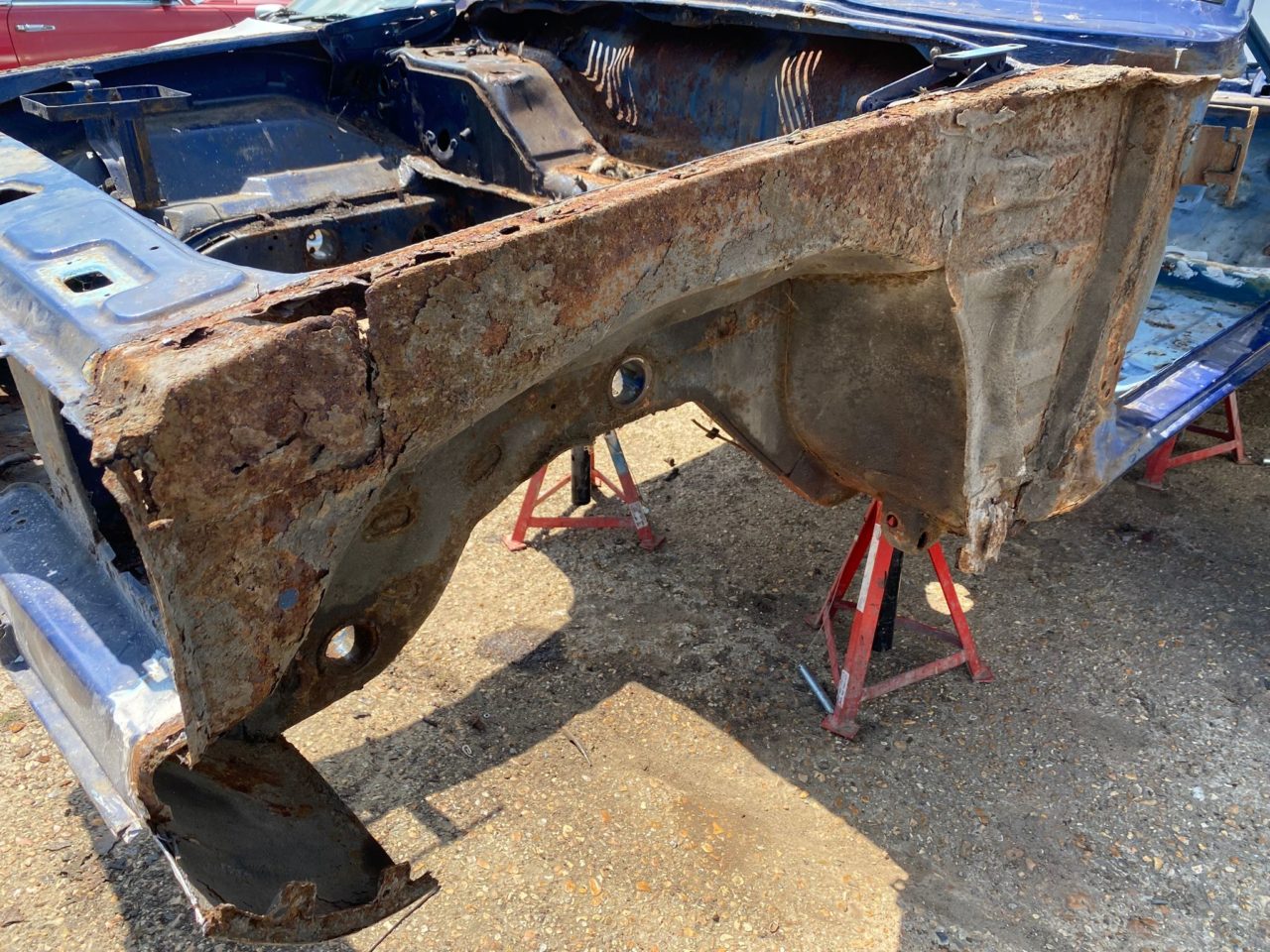
If you work on cars long enough in West Sussex, you develop an eye for rust. Not the dramatic, falling-apart kind you see in old photographs, but the everyday corrosion that creeps in quietly. A bubble on an arch. Flaking underseal. A scab along a sill seam. Most of it looks minor at first glance. Some of it is. Some of it absolutely isn’t.
We often see cars come into the workshop where the owner says, “It’s only a bit of rust.” Sometimes they’re right. Sometimes they’re looking at the tip of something much more serious.
The trouble with rust is that what you see and what’s happening underneath are often two very different things.
Not all rust is structural. That’s important to say upfront.
Surface corrosion on an exhaust, light bubbling around a stone chip, slight discolouration on suspension arms – these are common and often not urgent. In coastal parts of West Sussex, especially near Brighton and along the seafront, salt in the air accelerates this kind of surface corrosion. Even inland, winter road salt and damp rural lanes around Hassocks, Burgess Hill and Haywards Heath don’t help.
Cosmetic rust usually indicates the corrosion hasn’t compromised the metal's strength. It’s sitting on the surface. You’ll see:
In many cases, that can be treated and managed. Left alone, it may get worse. But it isn’t automatically a safety issue.
Most people assume all rust is equally bad. It isn’t. Location matters far more than appearance.
Cosmetic rust is the stage where you’ve still got options. The metal hasn’t lost its strength, it hasn’t perforated, and it isn’t sitting in a structural area. That doesn’t mean you ignore it. It means you deal with it properly before it becomes something worse.
We often see small bubbles around wheel arches, along door bottoms, or around the edge of a bonnet where a stone chip wasn’t touched up. In West Sussex, especially closer to the coast, salt in the air can creep into tiny paint cracks and start corrosion surprisingly quickly. Inland, winter road salt and damp lanes do much the same job.
The key with cosmetic rust is stopping it early.
Proper repair isn’t just sanding it flat and brushing on paint. If corrosion has started under the surface, it needs to be taken back to clean metal. That usually means grinding or sanding beyond the visible bubble. Rust spreads underneath paint, so what you see on the surface is rarely the full extent.
Once the metal is cleaned, the area needs to be treated properly. That may involve:
Preparation is everything. If any contamination remains, the rust will return. We regularly see quick cosmetic jobs that looked fine for six months but start bubbling again because the underlying corrosion wasn’t fully removed.
On panels like arches or lower doors, it’s also important to consider why the rust started. Stone chips, poor drainage, trapped dirt or moisture inside seams are common causes. If the root issue isn’t addressed, the repair may not last as long as it should.
Cosmetic rust repairs make sense when the surrounding metal is solid, and the corrosion is genuinely surface-level. Done properly, they can preserve original panels and prevent much larger repairs later on.
The important thing is not to confuse cosmetic with harmless. Rust doesn’t reverse itself. Early intervention is usually simpler, cleaner and far less expensive than waiting until it becomes structural.
This is where things change.
Rust becomes structural when it affects areas that contribute to the vehicle's strength and safety. And this isn’t about how big the rust patch looks. A small hole in the wrong place is far more serious than a large flaky patch somewhere non-structural.
In practice, we pay close attention to:
The MOT rules refer to “prescribed areas,” which means corrosion within 30cm of a mounting point or structural component can result in a failure.
We often see cars where the outer sill looks tidy enough, but the inner sill behind it is weakened. Or a rear arch that’s bubbling slightly, but the inner arch structure behind it has thinned significantly. Once rust gets between panels or inside box sections, it spreads quietly.
There’s a lot of confusion around MOT corrosion rules.
A car can have visible rust and still pass. Equally, a small perforation in the wrong area can lead to a failure.
Testers are looking for corrosion that affects structural integrity. Specifically:
We regularly see cars fail on relatively small holes in sills or inner arches because they’re within a prescribed area. Owners are often surprised because “it didn’t look that bad.”
But strength isn’t judged by how it looks from above. It’s judged by what’s happening in the metal itself.
This is something we see repeatedly across West Sussex.
A car has failed previously. Someone has plated over the rust. The outer surface looks fine. A year or two later, it’s back again.
The reason is simple. Welding over weakened or contaminated metal doesn’t remove the underlying corrosion. It traps it.
In practice, proper structural welding means cutting back to solid steel. That sometimes means removing more than expected. It takes longer. It costs more. But it lasts.
We often uncover:
Underseal in particular can be misleading. It can make an area look protected while corrosion continues underneath.
Good welding work isn’t about passing an MOT. It’s about restoring strength.
Modern cars are better protected than older vehicles. Galvanised panels and improved coatings have helped. But once rust starts, it still spreads.
Interestingly, classics and older cars often rot in more predictable ways. Drainage was less sophisticated. Seams trap moisture. Inner arches and sills suffer first.
In West Sussex, damp winters combined with salty coastal air create a steady environment for corrosion. Even cars that aren’t driven daily can deteriorate if stored in unventilated garages.
We often find that classics, which are regularly used and maintained, are actually healthier than modern cars that sit unused for long periods.
Standing water and trapped moisture do more damage than mileage sometimes.
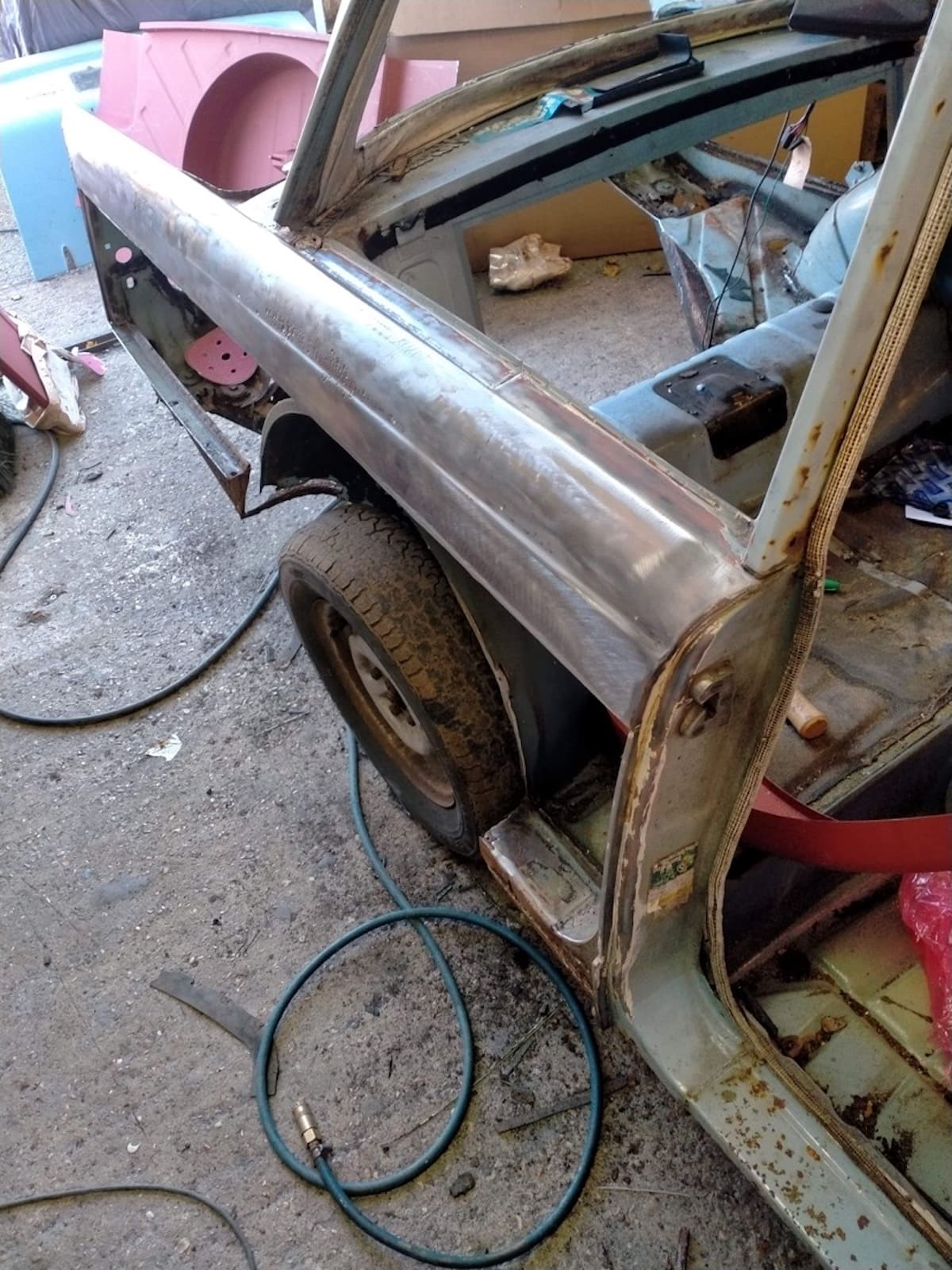 Rust repair isn’t automatically a bad investment.
If the vehicle is otherwise structurally sound, corrosion is localised, and the car has good overall integrity, welding repairs can significantly extend its life.
We see plenty of everyday cars with solid engines and drivetrains that simply need structural attention to keep going.
For classics, the equation changes again. Sentimental value, rarity and condition elsewhere all matter.
Catching corrosion early makes a significant difference. A small section repair today can prevent major structural reconstruction later.
The key is honest assessment.
There are cases where corrosion has spread too far.
If multiple structural areas are compromised, chassis rails are severely weakened, or corrosion is widespread across mounting points, repair costs can quickly exceed the vehicle’s realistic value.
We sometimes have difficult conversations with owners about this. It’s not about being negative. It’s about being realistic.
Welding can restore strength, but it can’t always be cost-effective for a vehicle that has deteriorated extensively throughout.
Knowing when to stop is part of responsible repair work.
You can’t eliminate corrosion entirely in the UK, but you can slow it down.
We often advise:
Coastal owners especially should pay attention to underbody areas. Salt air does its work quietly.
Small preventative steps make a big difference over time.
Rust isn’t automatically catastrophic. But neither is it harmless.
The real issue is understanding where it is and what it’s affecting.
What looks minor can be structural. What looks dramatic can sometimes be cosmetic. That’s why proper inspection matters.
At White’s Bodyworks in Hassocks, we look at corrosion every week. Everyday cars. Classics. Modern vehicles. Some need small interventions. Some need serious structural work. Some simply need monitoring.
Guessing is expensive. Fear isn’t helpful either.
If you’re unsure whether rust on your vehicle is cosmetic or structural, the only sensible approach is to have it inspected properly. Not with panic, not with assumptions, but with experience.
That’s usually when the real answer becomes clear.