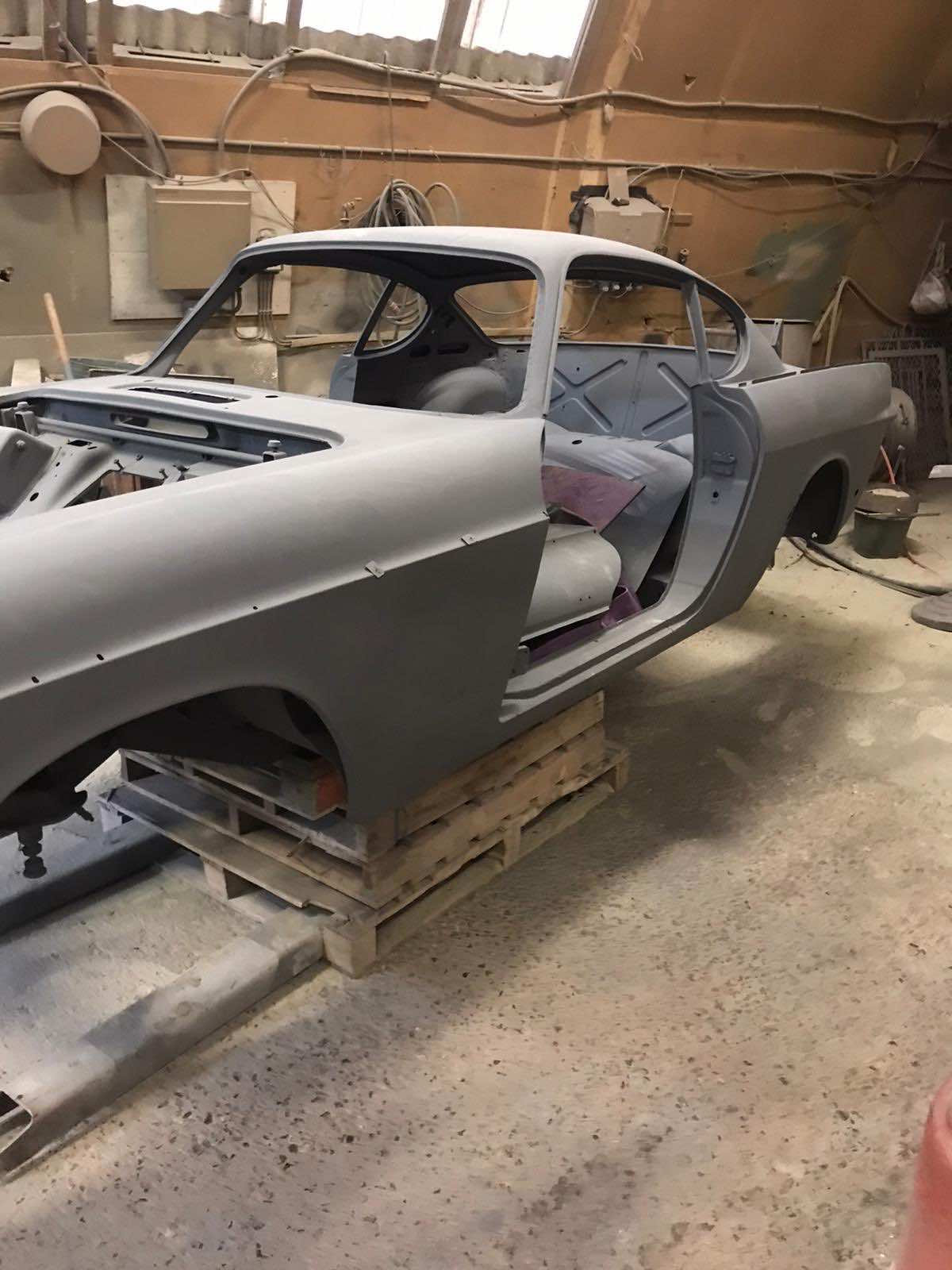
Classic car restoration rarely starts with the full truth. That is not because owners are hiding anything. More often, it is because the car itself is.
A classic can look quite presentable when it first arrives. The paint may still polish up. The panels may seem straight enough. The engine might run, the doors might shut, and from a few feet away it may look like a perfectly reasonable restoration project.
Then the trim comes off. A wing is removed. Old underseal is scraped back. A sill is opened up. Suddenly, the story changes.
At White’s Bodyworks, we work on enough classic cars to know that the first inspection is only the beginning. The real condition of an older vehicle often reveals itself slowly, one layer at a time. That can be frustrating for owners, especially when they came in hoping for a fairly straightforward repair. But it is also completely normal.
Classic cars have lived long lives. They have been repaired, patched, repainted, stored, revived, used hard, neglected, cherished and modified. Sometimes all of those things have happened to the same vehicle.
The hidden problems are not always dramatic, but they matter.
Filler has its place. Used properly, in the right amount, over sound metal, it is part of normal body repair. The problem starts when filler has been used to hide corrosion, poor panel shape or accident damage.
We often find thick filler in arches, lower doors, rear quarters and around sill sections. From the outside, the panel may look acceptable. Once the surface is stripped back, it becomes clear that the filler is doing far more work than it should.
In practice, old filler can hide several issues:
The difficulty is that filler can hold a car together visually for years. It may pass casual inspection and even look decent in photographs. But eventually, cracks appear, bubbling starts or the panel loses its shape. By then, the repair underneath often needs proper attention.
This is why restoration work has to be honest. There is no point painting over a panel that is already unstable. It might look good for a short while, but it will come back to haunt the owner.
A lot of classic cars have been welded before. Sometimes several times.
That is not automatically a problem. Good older welding can last perfectly well. But we often come across repairs that were done simply to get a vehicle through an MOT or keep it usable for another year. At the time, that may have made sense. The car might not have been valuable then. It was just an old motor.
Now, decades later, those repairs become part of the restoration challenge.
We regularly see plates welded over rusty metal, overlapping patches, weak seams, thin material and poor penetration. In some cases, the repair looks sturdy until the area is cleaned back. Then it becomes clear the new metal was never properly tied into sound structure.
Welding onto bad metal is always a short-term answer. The surrounding steel continues to deteriorate, moisture gets trapped between layers, and the repair eventually fails.
Proper restoration welding usually means cutting further back than people expect. That is not done for the sake of it. It is done because new steel needs a strong foundation. If the metal around the repair is thin, contaminated or crumbling, the job is already compromised.
On classics, this matters especially around sills, floors, chassis rails, inner arches, spring hangers and suspension mounting points. These are not cosmetic areas. They affect the strength and safety of the vehicle.
Rust is rarely polite enough to stay where you can see it.
One of the most common discoveries during a restoration is corrosion inside box sections, behind outer panels or between seams. The outside may show only light bubbling, but the hidden side can be far worse.
We often see this around:
Moisture gets trapped, sits quietly and does its work from the inside out. By the time the paint bubbles, the metal behind it may already be thin.
This is especially common on vehicles that have been stored in damp garages or used on salted roads in winter. West Sussex has its own mix of conditions too. Coastal air, wet lanes, mud, winter salt and long periods of damp weather all contribute.
Underseal can make things worse if it has been applied over corrosion. It gives the impression of protection while sealing moisture underneath. We have stripped plenty of cars where the underbody looked black and solid at first glance, only for the metal behind it to be badly weakened.
The lesson is simple. Rust has to be investigated, not guessed at.
Mounting points are one of the areas owners do not always think about until something fails.
Engine mounts, suspension mounts, body mounts, subframe mounts, seatbelt mounts and bumper mounts all take stress. Over decades, the metal around them can crack, rust or distort. Rubber mounts perish. Bolts seize. Brackets fatigue.
On a classic, the surrounding metal is often as important as the component itself. A new bush or mount will not solve the problem if the panel or bracket it attaches to is weak.
We often find tired mounting areas during strip-down work. Sometimes there are signs of movement: shiny witness marks, cracked paint, elongated holes or distorted brackets. Other times, corrosion has crept in around the mounting point and weakened the structure.
This kind of issue can affect how the whole car feels. Vague steering, poor panel alignment, drivetrain movement, clunks or vibration may all trace back to tired or weakened mounting points.
In restoration, these areas need careful checking. They are not glamorous, and they do not always photograph well, but they are fundamental to how the vehicle behaves.
Anyone who has worked on older vehicles knows this problem well.
A job that looks simple can become time-consuming because a bolt refuses to move. Heat, penetrating fluid, patience and experience all come into play. Sometimes the fixing still snaps.
Seized fixings are part of classic car work. They are caused by age, corrosion, previous over-tightening, poor access and decades of exposure. Exhaust studs, suspension bolts, wing fixings, bumper mounts and brake fittings are regular culprits.
Most people do not realise how much time this can add to a restoration. Removing a panel carefully is very different from simply tearing it off. If the part is rare, original or difficult to replace, rushing is not an option.
Broken fasteners can also reveal deeper issues. A bolt may have seized because water has been sitting in that area for years. A captive nut may spin because the panel behind it has rusted. A bracket may break because it has thinned out.
Classic restoration is full of these small delays. They are not dramatic, but they shape the job.
Old wiring can be one of the most unpredictable parts of a classic vehicle.
We often find brittle insulation, poor earths, corroded terminals, non-original switches, added accessories and repairs made with whatever wire was available at the time. Some of it works. Some of it works only when it feels like it.
Electrical problems on classics are often blamed on the car’s age or make, but in practice many faults come from old alterations. Radios, alarms, extra lights, electric fans, ignition changes and charging upgrades may all have been added over the years.
The issue is not modification itself. It is whether the work was done properly.
A twisted wire hidden behind tape is not a long-term repair. Nor is an earth point screwed into rusty metal. We regularly see electrical systems where several small weaknesses combine to create intermittent faults.
That is the sort of problem that can drive an owner mad. The car starts one day and refuses the next. Lights flicker. Gauges behave strangely. A fuse blows for no obvious reason.
During restoration, wiring deserves proper attention. It does not always need complete replacement, but it should be inspected honestly. Electrical reliability makes a huge difference to whether a classic is enjoyable to use.
Some repairs we find were done decades ago, when the car was not considered special.
That context matters. A Ford Cortina, Mini, Austin, Volvo or BSA motorcycle may be cherished now, but at one time it was simply old transport. Repairs were often practical rather than perfect. Owners wanted the car back on the road without spending more than it was worth.
That is why we sometimes find work that looks crude by modern restoration standards but probably made sense at the time.
The challenge is deciding what to do with it now.
Some old repairs can stay if they are sound and not causing problems. Others need removing completely. The decision depends on structure, safety, finish and the owner’s plans for the vehicle.
Not every classic needs to be returned to factory condition. In fact, over-restoration can strip away some of the car’s character. But poor repairs that affect strength, reliability or finish have to be dealt with properly.
Restoration is partly about judgement. Knowing what to preserve is just as important as knowing what to replace.
Not every classic has had an easy life. Many have been bumped, repaired and put back on the road long before anyone thought of them as collectible.
During restoration, we sometimes find evidence of old accident damage. Uneven panel gaps, rippled inner panels, repairs around chassis legs, mismatched wings, distorted bumper mounts or unusual filler thickness can all point to previous impact.
Sometimes the repair is harmless enough. Other times, it affects alignment, panel fit or even suspension geometry.
Older vehicles were often repaired using methods that would not be accepted today. Again, that does not always mean the repairer was careless. Standards, values and expectations were different. But if the old damage is still affecting the vehicle, it needs addressing.
This is particularly important before paintwork. A beautiful finish will not hide poor alignment for long. If panels do not sit correctly, if doors need lifting to shut, or if bonnet gaps are uneven because the structure underneath is distorted, the problem has to be tackled at source.
Door seals, window seals, fuel hoses, brake hoses, suspension bushes, engine mounts, grommets and coolant hoses all degrade with age. Some split. Some harden. Some look acceptable until they are moved.
We often see classics where the bodywork is being restored, only to find that water has been getting in through tired seals for years. That water then sits in floors, doors, boot wells and under carpets, quietly feeding corrosion.
Mechanical rubber matters just as much. Old fuel hoses are a fire risk. Perished brake hoses can affect braking feel and safety. Worn bushes can make a car feel loose even if the main suspension components are sound.
In practice, restoration is a good time to inspect these items properly. Replacing rubber components may not be exciting, but it often transforms how a vehicle feels and helps prevent future problems.
Many classics spend long periods unused. That can be harder on them than regular use.
Fuel goes stale. Tanks corrode internally. Carburettors gum up. Pumps stick. Lines degrade. Filters clog.
We often see cars that ran when parked but no longer behave properly. The owner may expect a simple tune-up, but the issue is often deeper. A fuel system that has been sitting for years needs careful checking before the engine can be expected to run cleanly.
Modern fuels can add to the problem, especially in older systems not designed for them. Hoses, seals and carburettor components may not always tolerate today’s fuel blends well.
Restoration work should treat the fuel system as part of the whole vehicle. There is no point rebuilding an engine and feeding it through a dirty tank or brittle fuel lines.
Brakes are another area where hidden problems often appear.
A classic may stop well enough on a short test drive, but that does not mean the braking system is healthy. Wheel cylinders can weep. Calipers can stick. Brake hoses can swell internally. Drums may be worn. Handbrake mechanisms may be partially seized. Brake fluid may be old and contaminated.
We often find that cars which have been standing need more brake work than expected. That should not be surprising. Braking systems rely on hydraulic pressure, clean fluid and free-moving components. Time is not kind to any of those.
On older cars and motorcycles, correct adjustment also matters. A system can have new components fitted and still feel poor if it has not been set up properly.
Good brakes are not optional. However original or valuable a classic may be, it still has to stop safely in modern traffic.
A Practical View From The Workshop
The hidden problems found during classic restoration are not reasons to avoid owning old vehicles. They are simply part of the process.
A classic car is a survivor. It has already outlasted most vehicles of its era. The fact that it needs work should not be surprising. What matters is how that work is approached.
At White’s Bodyworks, we would rather uncover an issue properly than leave it hidden under fresh paint. That may not always be the quickest route, but it is the right one. A classic deserves repairs that will last, not cosmetic work that looks good just long enough to leave the workshop.
The hidden problems in classic car restorations are often where the real work begins.
Classic cars do not need to be perfect to be worth saving. They need honesty, patience and proper workmanship.
If your classic is hiding more than it is showing, that is not unusual. Bring it in, let us take a proper look, and we will tell you what we find. Not what sounds easiest, not what looks best on paper, but what the car actually needs. The good news is that the team at White’s Bodyworks can help. Contact us today to find out more.