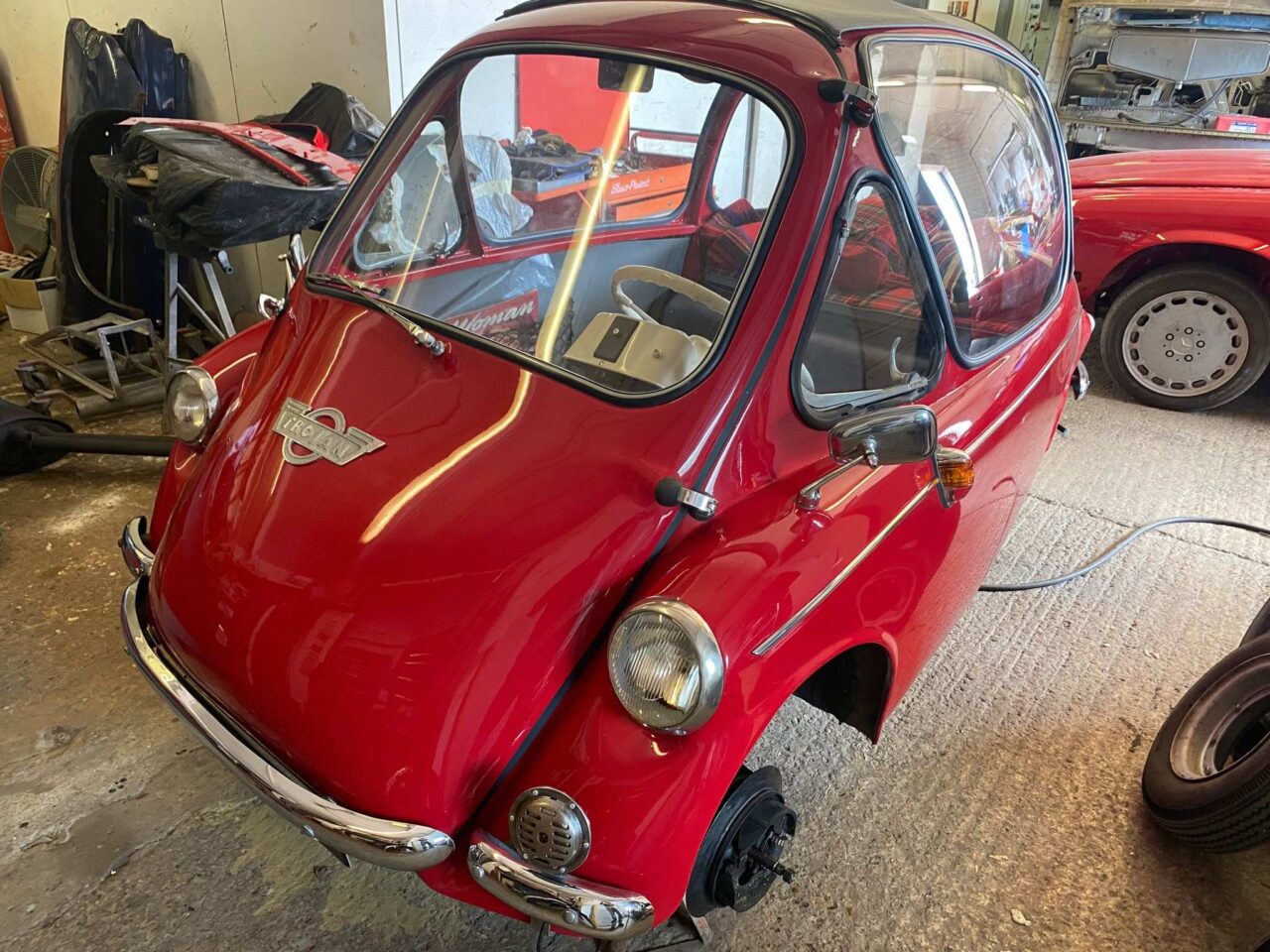
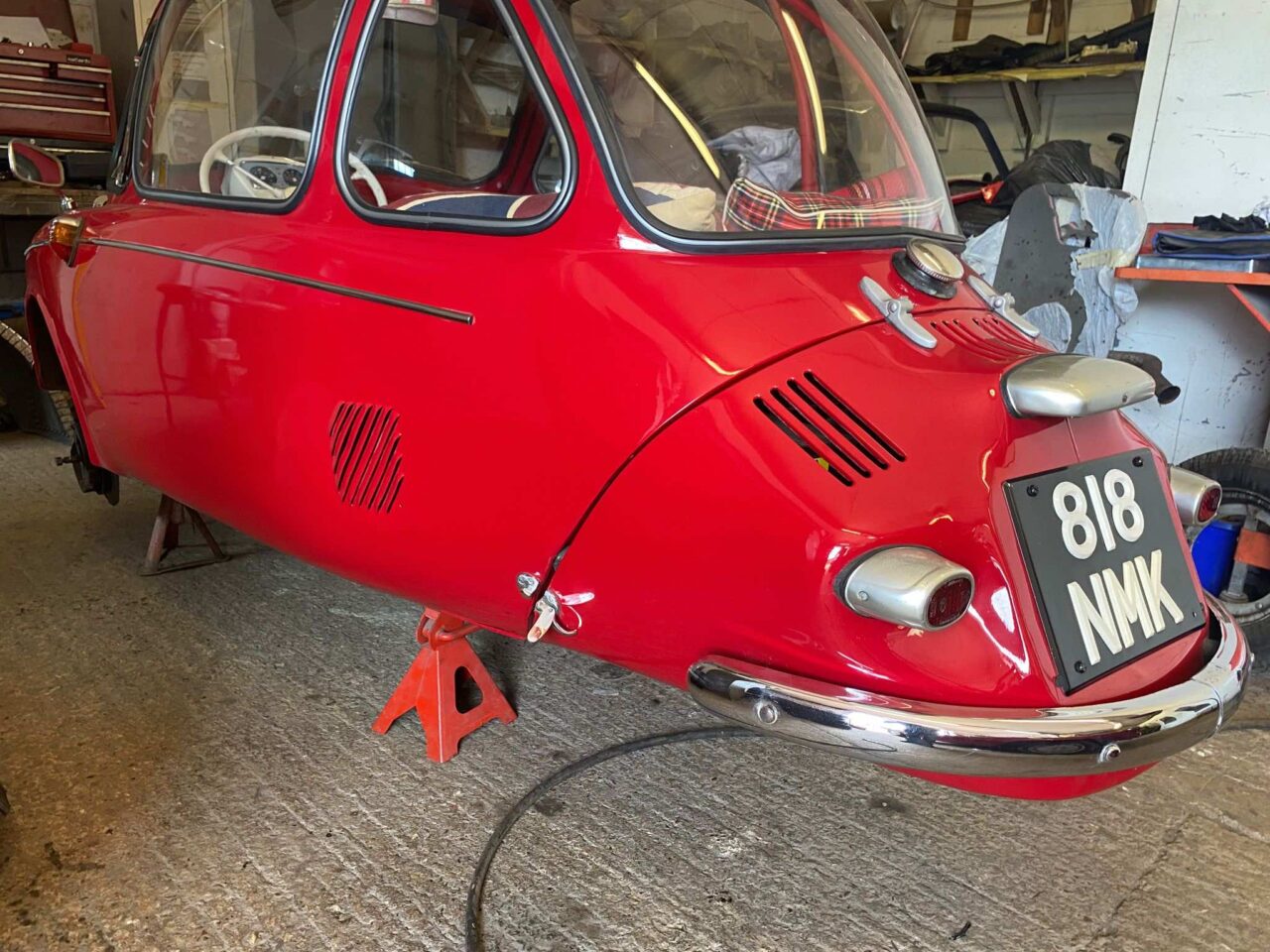
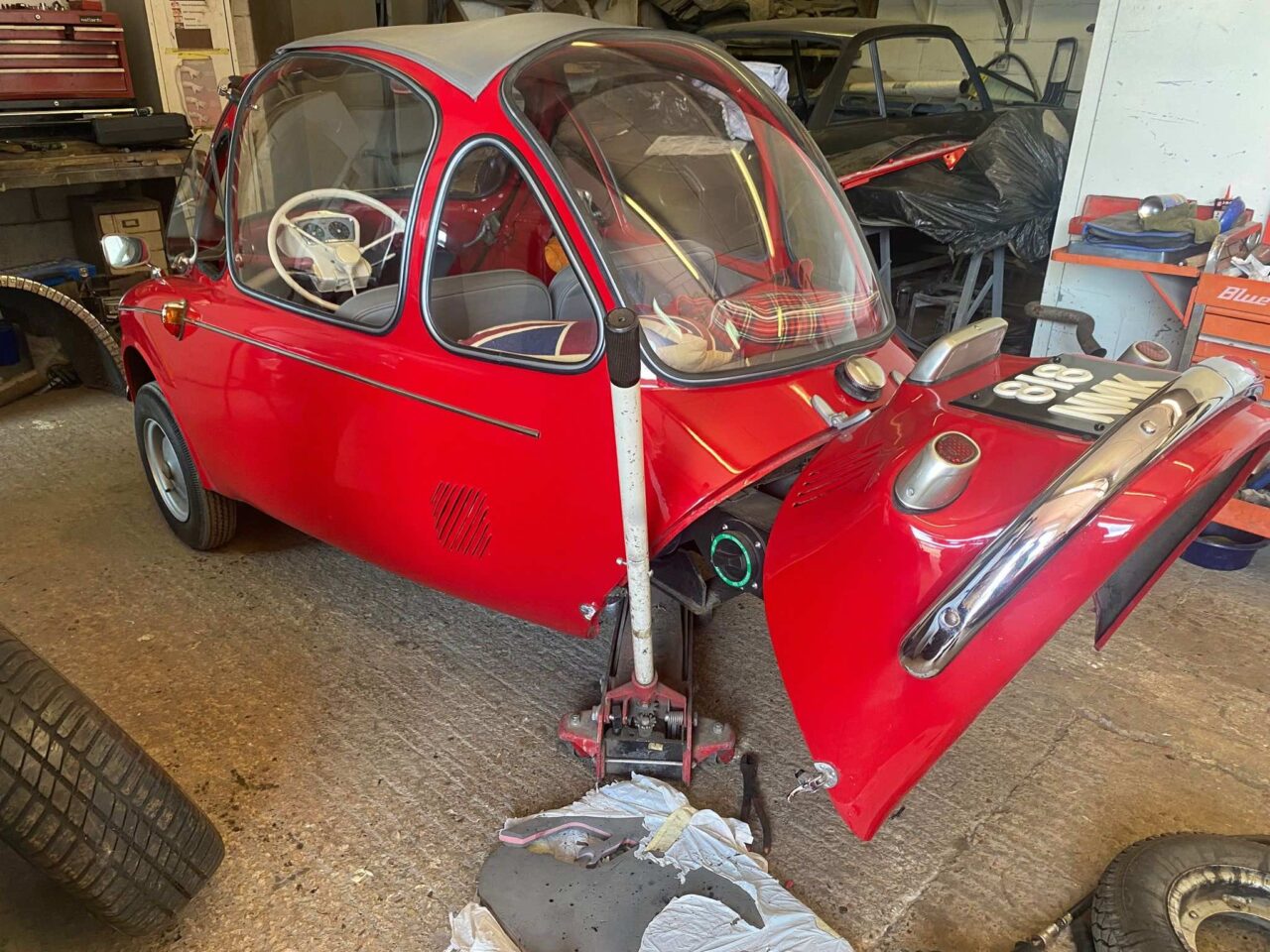
The Trojan Bubble Car is about as far removed from modern motoring as you can get. Small, lightweight and mechanically simple, these cars were built for economy rather than performance. In post-war Britain, that mattered. Fuel was expensive, budgets were tight, and something that could get you from A to B with minimal fuss had real appeal.
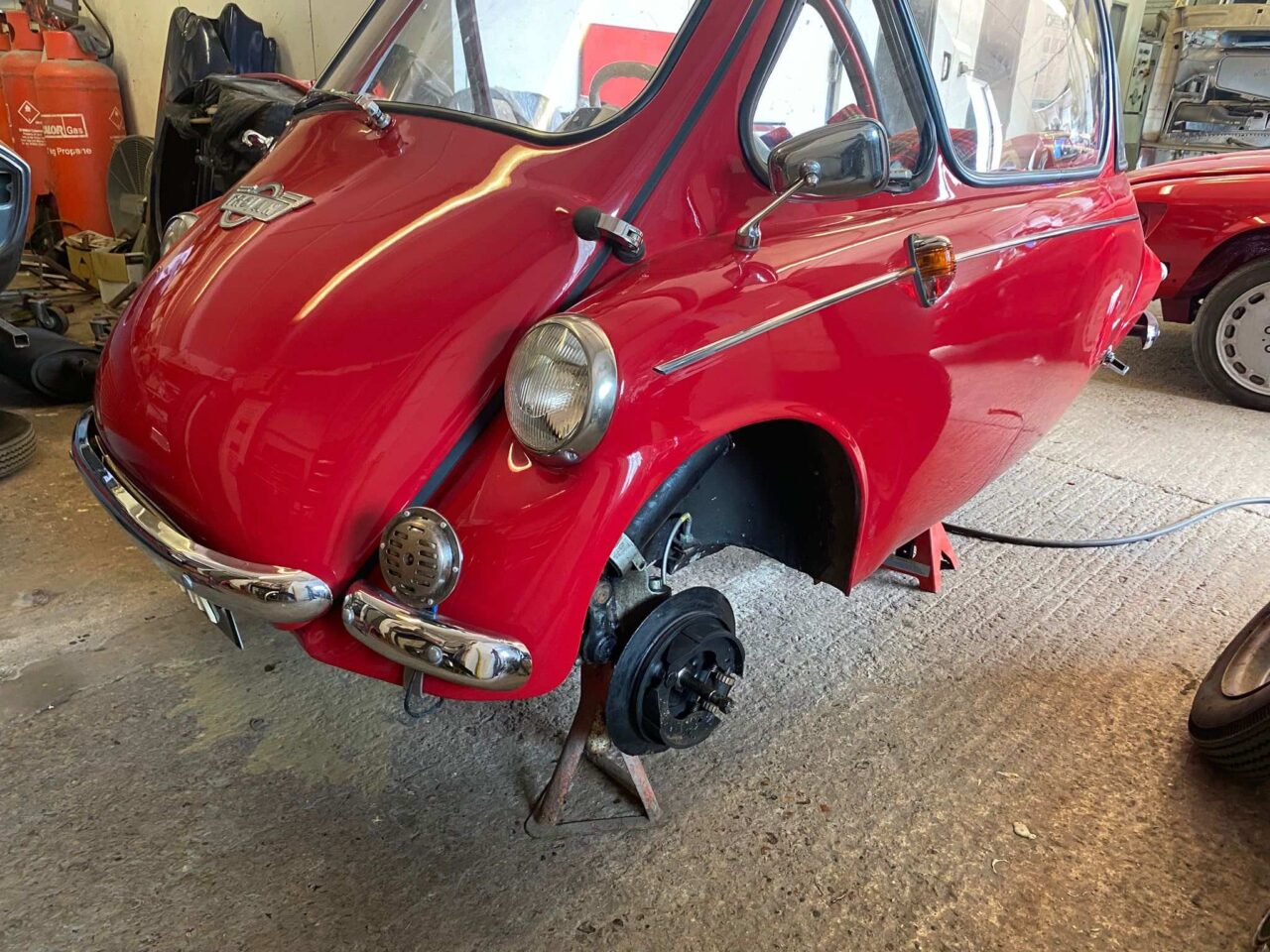
This example came in for a brake overhaul, which is fairly typical for vehicles of this type and age. On something as light as a bubble car, braking systems don’t have to work particularly hard compared to larger vehicles, but that doesn’t mean they can be neglected. In fact, the simplicity of the system makes proper condition even more important.
We often see older microcars in which the brakes technically function but not as effectively as they should. Pedal feel can be inconsistent, stopping distances longer than expected, and adjustments often compensate for wear rather than addressing it. Over time, components such as shoes, cylinders and linkages all degrade.
In practice, a brake overhaul starts with a full inspection rather than assuming what needs to be replaced. On cars like the Trojan, systems are usually straightforward, but access can be tighter than expected due to the compact design. We regularly find worn linings, tired hydraulic components and corrosion where moisture has sat for long periods.
At White’s Bodyworks in Hassocks, West Sussex, the approach is methodical. Components are stripped, cleaned and assessed individually. Where parts are serviceable, they’re prepared properly. Where they’re not, replacements are sourced or reconditioned as required. The aim is to restore consistent braking rather than just achieving a passable result.
Most people don’t realise how much difference a correct setup makes on lightweight vehicles. Because there isn’t much weight to stabilise them under braking, imbalance or poor adjustment is more noticeable. When the system is right, the car feels predictable and controlled. When it’s not, it can feel unsettled even at low speeds.
The goal with this overhaul isn’t to change the character of the car. It’s to make sure it behaves as intended. Smooth, progressive braking suited to the vehicle's design and weight.
Work like this doesn’t draw much attention once it’s finished, but it’s fundamental to how the car feels on the road. On something as small and simple as a Trojan Bubble Car, getting the basics right makes all the difference.
It’s a reminder that even the most modest vehicles rely on proper mechanical condition to remain usable.