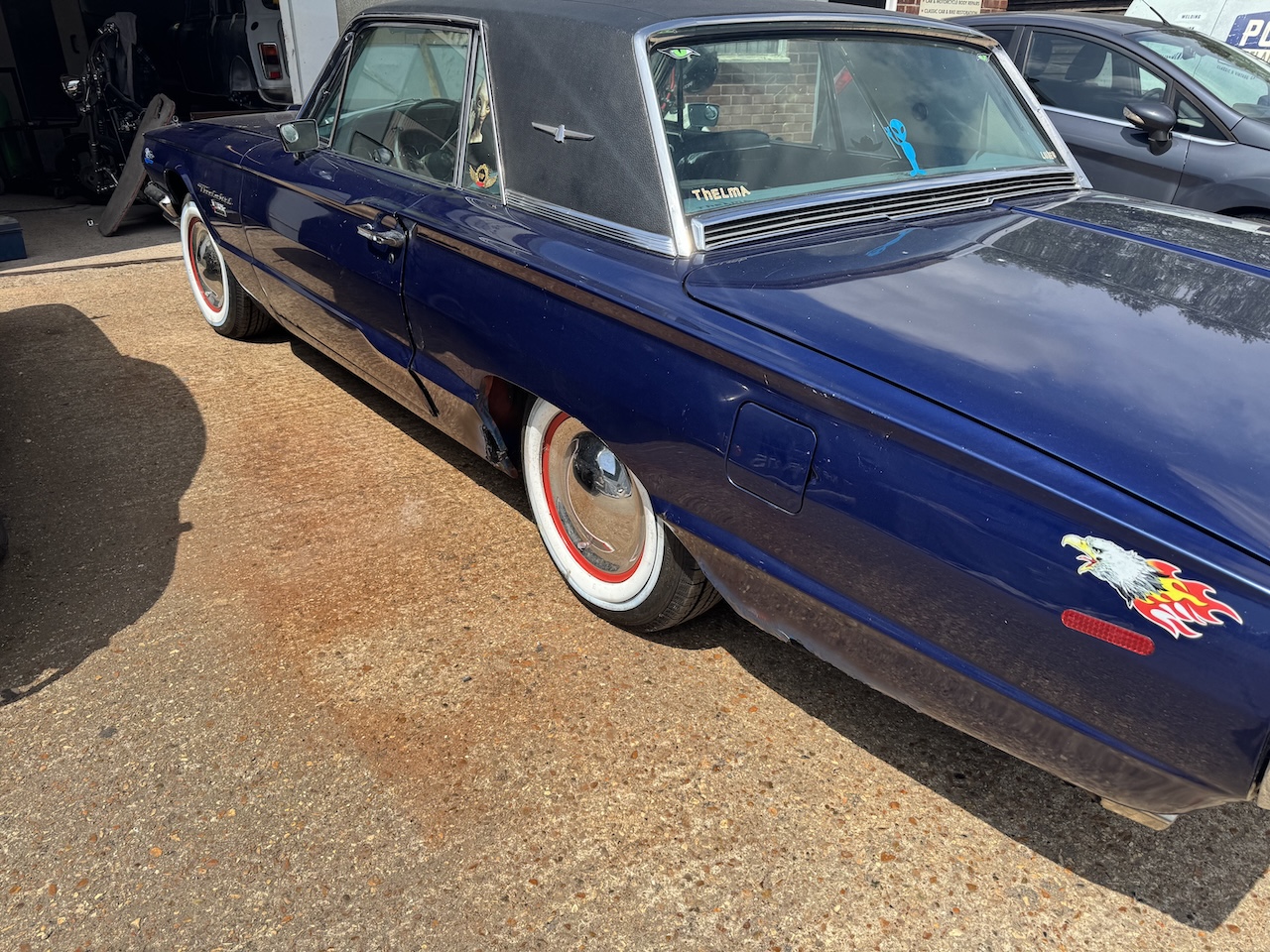
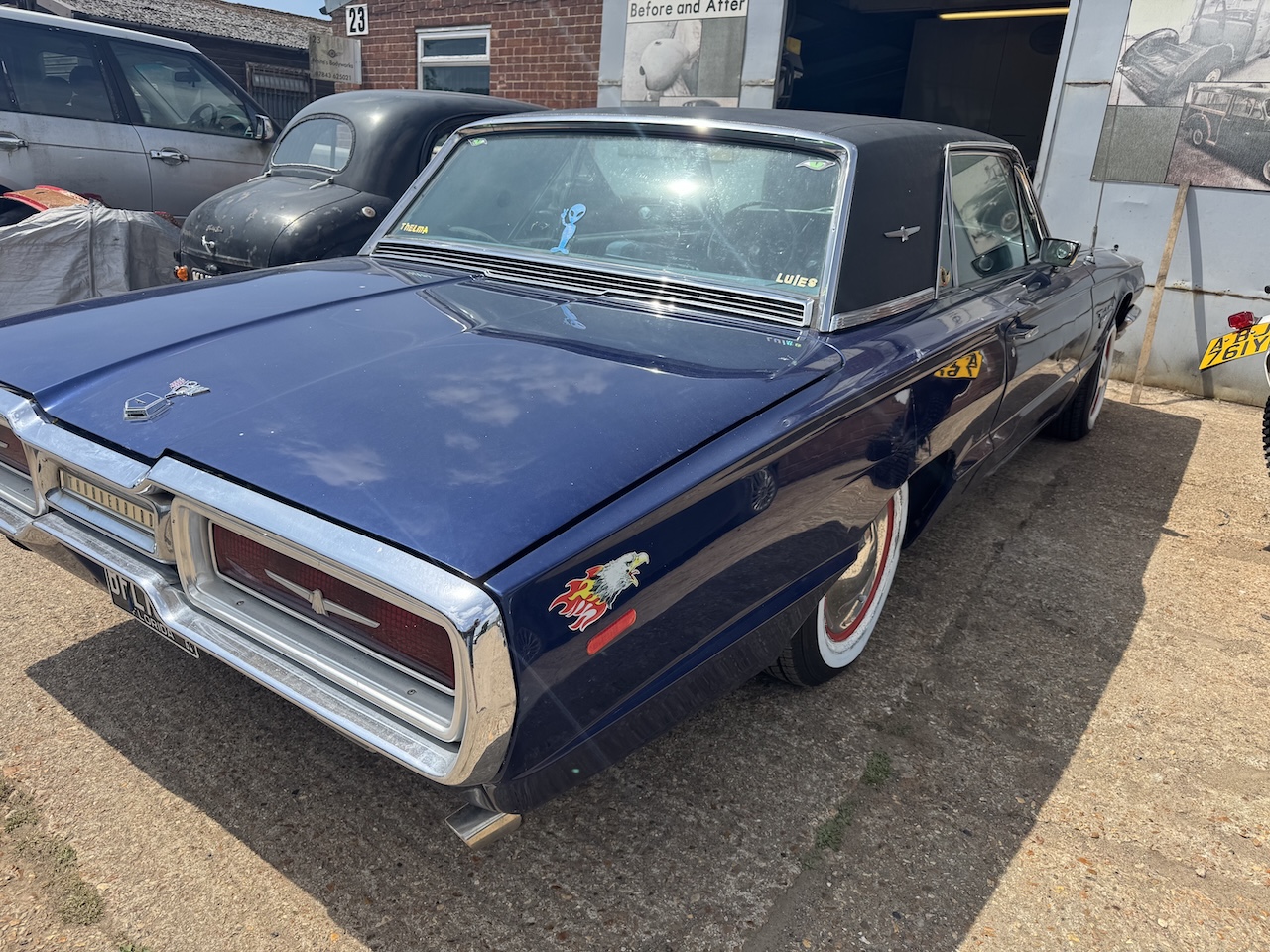
The Ford Thunderbird occupies a very different corner of motoring history to most of the British classics we see. First launched in the mid-1950s, the Thunderbird wasn’t designed as a sports car in the European sense. It was Ford’s idea of a personal luxury car. Big engine, relaxed cruising, comfort first, performance delivered with torque rather than urgency.
Early Thunderbirds were unapologetically American. Large-capacity V8s, automatic gearboxes, power steering and suspension set up for long, straight roads rather than tight country lanes. On paper they can look simple, but in practice they’re very different machines to work on if you’re used to smaller British or European cars.
This particular Thunderbird is in for mechanical work rather than cosmetic restoration. Externally, cars like this often present well enough, but that can be misleading. We often see American classics that look solid but suffer from tired mechanical systems underneath, usually the result of long periods of light use or storage.
Most people don’t realise how much strain inactivity puts on large engines and drivetrains. Seals harden, hydraulic systems degrade, cooling systems sludge up and fuel systems suffer badly from modern fuels. With a big V8, small issues tend to become expensive ones if they’re ignored.
At White’s Bodyworks, mechanical work on American classics starts with understanding how they were meant to operate. These cars aren’t delicate, but they are sensitive to incorrect setup. Cooling efficiency, ignition timing, fuelling and transmission behaviour all need to work together. Fixing one issue in isolation rarely gives good results.
In practice, mechanical work on a Thunderbird often involves careful inspection of the engine, gearbox, braking system and suspension as a complete package. We regularly see worn bushes, tired dampers and brake components that are technically serviceable but no longer doing the job properly. On a heavy car, that matters far more than people expect.
The engines themselves are usually robust, but only when maintained correctly. Poor oil circulation, marginal cooling or incorrect ignition setup can quickly undo that reputation. We also see a lot of previous “running repairs” where parts were replaced to cure symptoms rather than causes. Sorting that out takes time and methodical work.
What owners often want from a car like this isn’t modern performance. It’s smoothness, reliability and confidence. A Thunderbird should start easily, idle steadily, pull cleanly and cruise without drama. When those basics are right, the car does exactly what it was designed to do.
Mechanical projects like this are rarely glamorous. There’s no instant visual payoff, and progress can be slow because each system affects the next. But without solid mechanical foundations, cosmetic work is just a distraction.
This Thunderbird is a good example of why proper mechanical attention matters, especially on large, powerful classics. Getting them right isn’t about changing what they are. It’s about understanding how they work, addressing age-related issues properly, and returning them to the relaxed, dependable machines they were always meant to be.