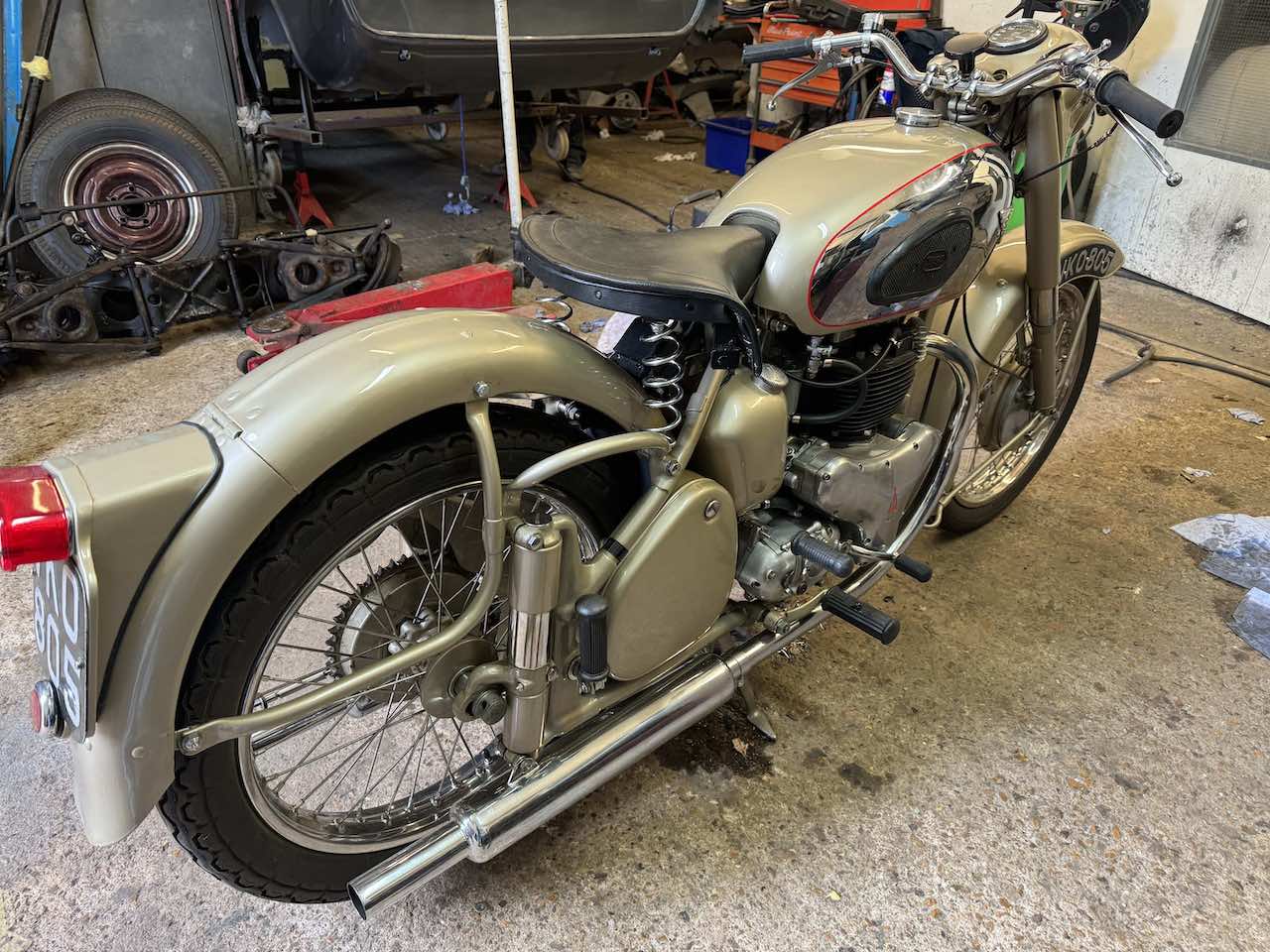
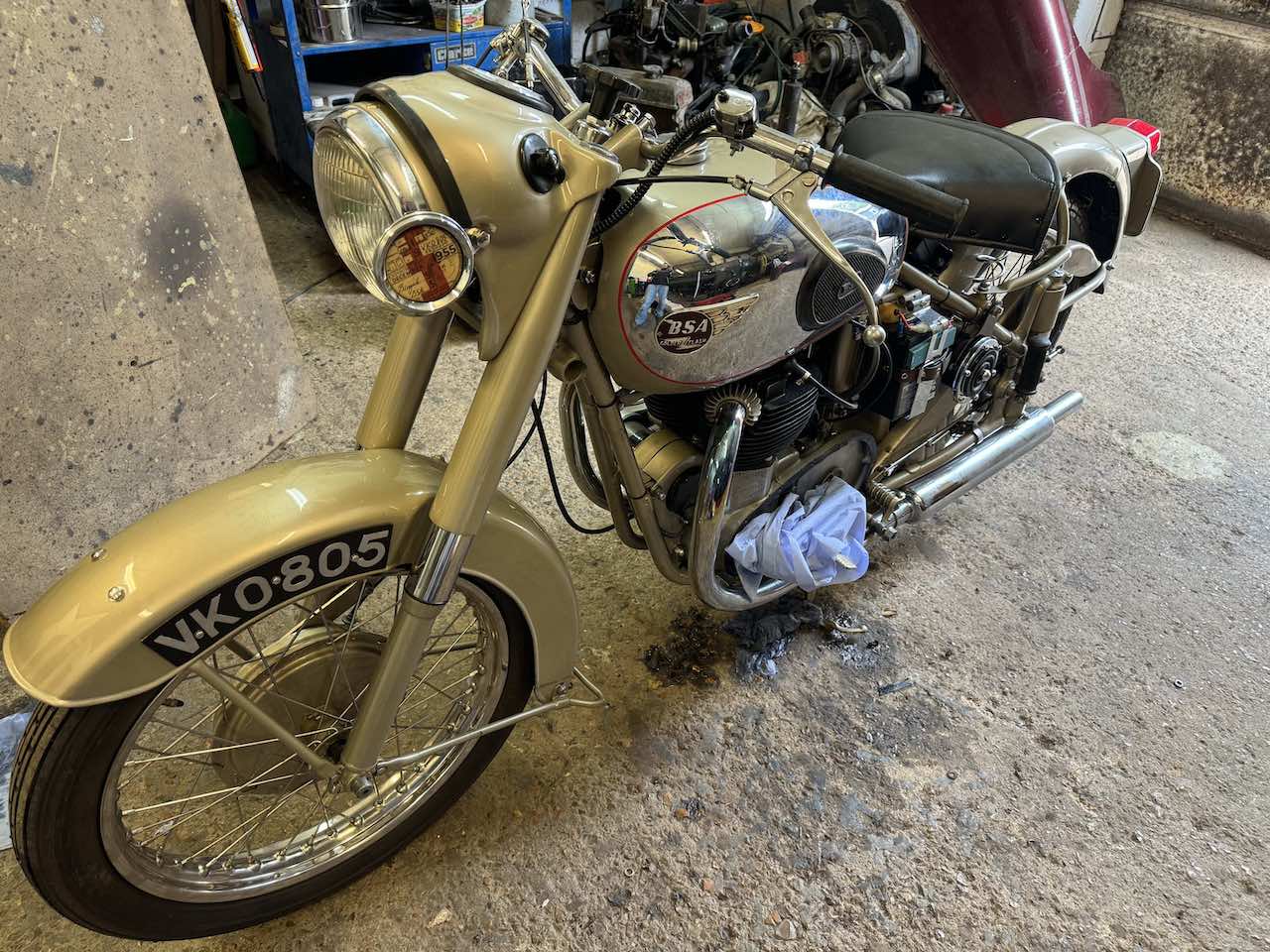
The BSA A10 is a proper piece of British motorcycling history. Built through the 1950s, it was designed as a larger, more capable twin for riders who wanted distance, reliability and a bit more presence on the road. Compared to smaller machines of the time, the A10 feels substantial. More torque, more weight, and a riding style that suits steady, confident progress rather than quick bursts.
This particular A10 is in for restoration and ongoing mechanical work, having reached the point where general wear has started to affect how the bike runs and feels. That’s typical of machines of this age. They don’t usually fail all at once. Instead, performance drops off gradually. Starting becomes less predictable, oil control weakens, and tolerances drift.
Most people don’t realise how much these engines will tolerate before they finally need attention. The A10 is a strong unit when built properly, but like many British twins of the era, it depends on correct clearances, good oil flow and careful assembly. When those things slip, problems tend to build quietly.
At White’s Bodyworks in Hassocks, West Sussex, mechanical work on a bike like this begins with a full assessment rather than assumptions. Engines that have been apart before often tell a story. We regularly find signs of previous repairs, sometimes done well, sometimes done just to keep the bike running. Mixed components, worn threads, and makeshift fixes are all fairly common on older machines.
In practice, restoration work here focuses on bringing everything back into proper working condition. That means stripping, measuring and rebuilding with attention to detail. Bearings, seals, timing components and mating surfaces all need to be checked carefully. Small inaccuracies in a twin like this can lead to vibration, oil leaks or inconsistent running.
Beyond the engine, the rest of the mechanical setup matters just as much. Gear selection, clutch operation and ignition all play a part in how the bike feels. We often see bikes where individual components have been addressed over time, but the system as a whole hasn’t been brought back into balance.
The aim isn’t to modernise the A10 or change its character. These bikes are meant to feel mechanical. They vibrate, they respond directly to input, and they reward a certain style of riding. When restored correctly, that character becomes an asset rather than a drawback.
Mechanical restoration takes time, especially when dealing with older parts and variations in condition. There’s no benefit in rushing assembly or overlooking small issues. They tend to come back quickly once the bike is in use.
This A10 is still a work in progress, but the direction is clear. Restore reliability, bring the mechanical components back into proper alignment, and retain the feel that made these bikes so popular in the first place. It’s the sort of work that sits behind the scenes, but it’s what keeps machines like this running as they should.