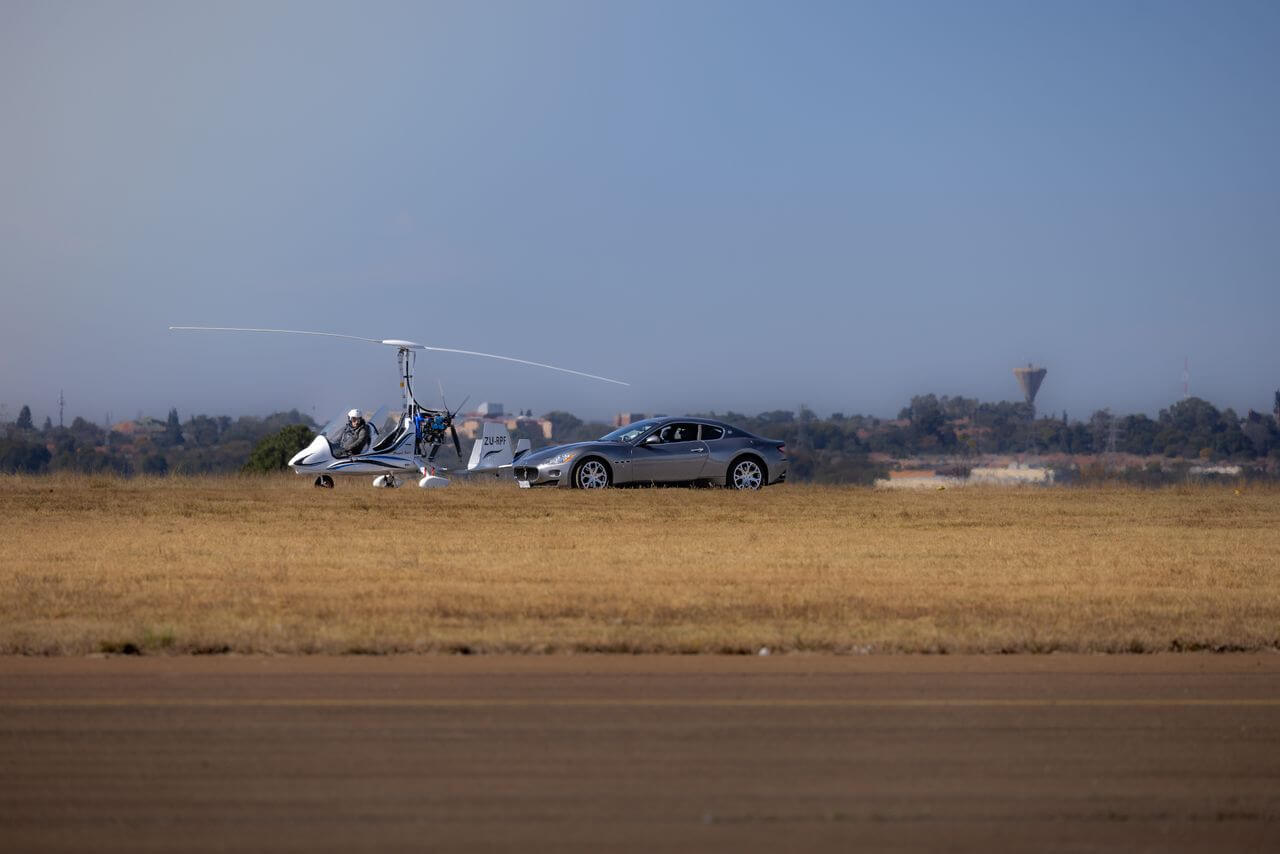
Flying cars have always sat in that odd space between serious engineering and childhood imagination. They belong to comic books, old science-fiction films, futuristic city drawings and those predictions from decades ago that also promised robot butlers and meals in pill form.
And yet, here we are, still talking about them.
Not as fantasy this time, but as something manufacturers, aviation firms and technology companies are actively developing.
The RAC has looked at several flying car and electric vertical take-off and landing concepts, including projects involving Toyota and Joby, Suzuki and SkyDrive, Porsche and Boeing, Honda, and hydrogen-powered eVTOL ideas.
Another RAC piece covered KleinVision’s Air Car, a road-going vehicle with aircraft capability that has moved towards production through a manufacturing agreement.
So the question is no longer quite as silly as it once sounded.
Is the future flying cars? Possibly. But not in the way most people imagine.
At White’s Bodyworks, we spend our days dealing with vehicles in the real world. Rust, paint, accident repairs, old panels, tired mounts, welding, mechanical wear and the thousand small details that make a car safe and usable. From that point of view, the flying car idea is fascinating, but it also raises a lot of practical questions.
Because making a vehicle fly is one thing. Making it work as everyday transport is something else entirely.
The idea of a flying car is hardly new. People have been imagining them for almost as long as cars and aircraft have existed together. Once the motor car became common and powered flight became possible, the idea of combining the two seemed almost inevitable.
On paper, the appeal is obvious. Roads are congested. Journeys take too long. People want freedom, speed and convenience. A vehicle that can drive from home, take off, fly over traffic, land near the destination and continue by road sounds perfect.
It is a powerful image.
The trouble is that real vehicles have to deal with real compromises. Cars and aircraft are designed around very different priorities. A car has to cope with potholes, kerbs, rain, cold starts, parking dents, supermarket doors, MOT rules and years of road use. An aircraft has to be light, aerodynamic, stable, carefully maintained and safe in an entirely different way.
Trying to combine both creates a machine that has to satisfy two very demanding sets of requirements.
That is why flying cars have remained just out of reach for so long.
The phrase “flying car” covers several different ideas.
Some are closer to small aircraft that can also use roads. KleinVision’s AirCar is in that territory. It uses folding wings, transforms from car to aircraft, and is powered by a BMW engine using normal fuel.
Others are electric vertical take-off and landing aircraft, often called eVTOLs. These are more like air taxis than cars in the traditional sense. They may not be something you keep on your driveway. Instead, they could operate from dedicated landing sites, sometimes called vertiports, carrying passengers across cities or between transport hubs.
That distinction matters.
When most people picture a flying car, they imagine something that behaves like a normal car until the driver presses a button and rises above the traffic. In practice, the near future may be more controlled, more limited and more regulated. Flying taxis, airport shuttles, emergency service aircraft and specialist commercial use are more likely to arrive before ordinary motorists are flying to work.
That is not a criticism. It is just the practical route these technologies are likely to take.
It would be easy to dismiss flying cars as a gimmick, but that would be unfair. The engineering involved is serious.
Toyota’s involvement with Joby Aviation, Suzuki’s production partnership with SkyDrive, Honda’s eVTOL work, and Porsche and Boeing’s interest in urban air mobility all show that serious companies are paying attention. These are not garden-shed experiments.
Electric propulsion has changed the conversation. Batteries, electric motors and advanced control systems make vertical take-off more plausible than it once was. Multiple rotors can be controlled precisely. Software can stabilise aircraft in ways that would have been almost impossible mechanically. Materials are lighter. Sensors are better. Navigation systems are far more advanced.
From a workshop point of view, though, impressive technology always comes with a second question: how does it age?
A new machine can look extraordinary at launch. What matters over time is how it copes with wear, weather, minor damage, maintenance, regulation and real use. That is where vehicles prove themselves.
When a normal car breaks down, it pulls over. Inconvenient, sometimes dangerous, but manageable.
When a flying vehicle fails, the stakes are very different.
That alone explains why the future of flying cars cannot be casual. Certification, inspection, maintenance and operator training will all matter enormously. A road car can tolerate a surprising amount of neglect before it becomes completely unusable. It should not, but many do. Aircraft cannot be treated that way.
This is where the romantic idea of the flying car meets the reality of aviation.
A flying vehicle will need strict maintenance schedules. Components will have lifing requirements. Software will need validation. Batteries, rotors, motors, hinges, control surfaces, sensors and structural sections will all need monitoring. Even small damage may need proper assessment before the vehicle can fly again.
Anyone who has ever repaired accident damage knows that what looks minor from the outside can hide more serious issues underneath. That applies even more strongly when the damaged vehicle is expected to leave the ground.
A scrape on a car wing may be cosmetic. A damaged aerodynamic surface on a flying vehicle could be a very different matter.
The UK road network is already complicated enough. Add low-level air traffic and the planning becomes more difficult.
Flying cars or air taxis would need rules around take-off, landing, routing, altitude, noise, weather limits and emergency procedures. They would need places to land. They would need charging or refuelling facilities. They would need safe separation from buildings, power lines, drones, helicopters and other aircraft.
The RAC article on KleinVision’s Air Car mentions UK plans around flying taxis, piloted flights and regular services later this decade, along with the idea of vertiports for drones and electric aircraft. That gives a clue to how controlled this future may be.
It is unlikely that people will simply lift off from any driveway in a suburban street.
A more realistic future is one where flying transport operates from specific locations, along approved routes, under strict control. Useful, perhaps, but not quite the free-for-all vision people imagine.
That does not make the idea unimportant. It just makes it less like The Jetsons and more like a new branch of public or premium transport.
Cars already struggle with weather. Heavy rain, ice, fog, heat, flooded roads and high winds all cause problems. Flying vehicles would have to deal with those and more.
Wind is an obvious issue, especially for lightweight vertical take-off aircraft. Rain, visibility, icing, low cloud and storms all matter. If flying cars are to be useful, they need to operate reliably enough to justify the infrastructure, but safely enough to stay grounded when conditions are wrong.
That creates an interesting problem. If bad weather stops flying services, passengers still need another option. In Britain, that matters. We do not exactly enjoy predictable conditions.
For private ownership, weather limitations could be even more frustrating. Imagine owning a flying car that is perfectly capable in theory but grounded whenever the weather turns awkward. At that point, it becomes a very expensive normal car, or a very expensive aircraft that spends a lot of time waiting.
Again, none of this means the technology cannot work. It simply means the practical use case has to be honest.
Even if flying cars do become available, they will not be affordable everyday transport for most people at first.
New technology is expensive. Certification is expensive. Specialist manufacturing is expensive. Maintenance will be expensive too. Insurance is unlikely to be simple. Storage and operating requirements may also put them beyond normal ownership.
This is why early use is more likely to be commercial, specialist or premium. Airport transfers, high-value business travel, emergency response, medical transport, remote access and urban air taxi services all make more sense than replacing the family hatchback.
Most motorists are not choosing between a Ford Focus and a flying car any time soon.
That said, new technology often begins at the expensive end and gradually filters down. Electric vehicles were once seen as niche and expensive. Now they are common enough that workshops, insurers, recovery companies and drivers have all had to adapt.
Flying vehicles may follow a similar pattern, but probably more slowly because the regulatory and safety demands are much higher.
This is where the topic becomes more interesting for a workshop like White’s Bodyworks.
Every time a new transport technology appears, people predict the end of the ordinary car. Yet cars keep adapting. They have survived trains, motorcycles, buses, aircraft, motorways, emissions rules, congestion zones, EVs and now autonomous driving technology.
The car remains popular because it solves a very basic problem: personal, flexible transport.
A flying car may solve certain journeys brilliantly. It may reduce travel time across congested urban areas or connect places where roads are awkward. But it will not automatically replace the vehicle parked outside a house, used for shopping, school runs, commuting, tip runs, holidays and everything in between.
There is also the question of load. Many real-world vehicles are not just moving people. They are carrying tools, parts, shopping, dogs, prams, luggage, bikes and all the mess of life. A flying vehicle optimised for weight and range may not be the best answer to that.
For most people, the normal road vehicle still makes sense.
The more futuristic transport becomes, the more mechanical old vehicles seem.
That is not a weakness. It may become part of their appeal.
A classic car is almost the opposite of a flying car. It is grounded, analogue, repairable and full of physical feedback. You feel the steering. You hear the engine. You smell warm oil, old leather, petrol and paint. If something changes, you notice it through the machine rather than through a warning screen.
In a world of electric air taxis and automated transport, that sort of involvement may become more special, not less.
We have already seen this with classic cars and motorcycles. As modern vehicles become smoother, quieter and more digital, older vehicles offer something different. They are not better at everything. Far from it. But they are more involving.
A flying car may be technically astonishing. A well-sorted Triumph Spitfire, Volvo P1800, VW camper, BSA motorcycle or Mk3 Cortina offers something else entirely: a connection to motoring as a physical craft.
There is room for both.
No matter how advanced vehicles become, they will still need looking after.
The skills may change, but the principle will not. Structures need inspecting. Damage needs assessing. Paint and materials need understanding. Mechanical systems wear. Mounting points fatigue. Corrosion still finds a way. Even advanced composites and aluminium structures need specialist repair knowledge.
If flying vehicles become common, the repair world will have to adapt. Bodyshops and mechanical workshops may become more specialised, with stricter rules around what can and cannot be repaired. The boundary between automotive and aviation maintenance may become more important.
But the basic workshop mindset remains useful: do not guess, inspect properly, understand the material, repair to the correct standard, and know when something is beyond safe repair.
That applies whether the vehicle is a classic Mercedes SL or a future electric air taxi.
Motoring history is full of big predictions.
Some came true. Many did not.
The danger with flying cars is assuming that because prototypes exist, mass adoption is just around the corner. Real life is slower. Infrastructure takes time. Regulation takes time. Public trust takes time. Costs have to come down. Safety has to be proven again and again.
There will probably be impressive demonstrations, limited routes and specialist uses before anything resembling everyday flying transport arrives. That is still progress, but it is not the same as everyone commuting above the A23 by next Tuesday.
As a workshop, we tend to be naturally sceptical of hype. Not negative, just cautious. We see how vehicles age once the launch excitement has gone. We see what happens after ten winters, three owners, a missed service, a small accident and a repair done on a budget.
The future is not only about the first flight. It is about the tenth year of ownership.
Partly, perhaps.
Flying cars and eVTOL aircraft are no longer just fantasy. Serious companies are investing in them. Governments are planning for them. The technology is moving. Some form of flying transport looks increasingly likely, especially for specific routes and specialist uses.
But the ordinary car is not finished.
Most people will still need road vehicles. Classic cars will still matter. Workshops will still be needed. Repairs will still be part of vehicle life. And for all the excitement around flight, there is something reassuring about a machine that stays on the ground and does its job properly.
The future may include flying taxis, electric aircraft and vehicles that blur the line between car and aircraft. It may also include a lovingly restored Ford Cortina, a resprayed Mercedes R107 SL, a welded VW camper and a classic motorcycle being coaxed back into life after years off the road.
Progress does not have to erase the past.
At White’s Bodyworks, we are interested in where motoring is heading, but we are still very much occupied with what keeps vehicles real: metal, paint, structure, engines, repairs and care. Whether the future flies or not, there will always be value in understanding the machines we already have.
And until your car grows wings, it still needs looking after properly.
If yours is staying firmly on the road, bring it into White’s Bodyworks. We will take care of the dents, rust, paintwork, welding and repairs that matter in this world, not just the one promised in the future.