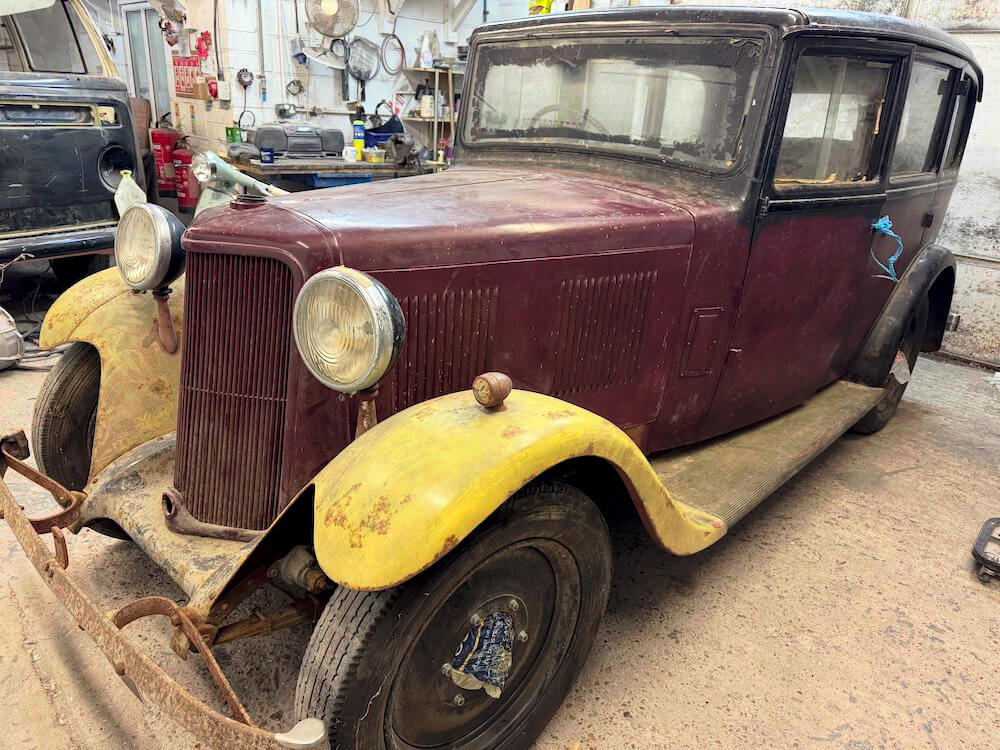
Classic cars are often associated with summer. Dry roads, country lanes, Sunday runs, shows, pub stops and the smell of warm oil after a decent drive. For many owners, the best months of the year are when the car finally comes out of the garage and starts being used properly again.
But there is summer weather, and then there is extreme heat.
A warm day is one thing. A proper heatwave is different. Older cars feel it. Cooling systems work harder, fuel behaves differently, tyres get hotter, interiors become uncomfortable, and small mechanical weaknesses that were easy to ignore in spring can suddenly become very obvious.
At White’s Bodyworks in Hassocks, West Sussex, we see this every year. The first really hot spell arrives, and cars that seemed perfectly happy a few weeks earlier begin to struggle. Some run hot in traffic. Some refuse to restart after a stop. Some develop fuel smells, sticky brakes, electrical issues or cooling leaks that had probably been building quietly for some time.
Most of the time, the heat has not caused the problem from nowhere. It has simply exposed it.
Classic cars can cope with hot weather, but they need a bit more thought than modern vehicles. They were built in a different era, with different traffic levels, different fuel, different materials and different expectations. Treat them properly, and they can still be very enjoyable in summer. Treat them like a modern daily driver, and they may object.
Modern cars are designed to sit in traffic with air conditioning running, electric cooling fans cutting in and engine management constantly adjusting itself. A classic car does not have that safety net.
Many older vehicles rely on simpler cooling systems, mechanical fans, smaller radiators and more direct mechanical adjustment. Some were designed at a time when traffic moved differently. Long queues, hot tarmac, modern congestion and extended idling can ask more of them than their designers ever expected.
That does not mean classics are fragile. Plenty are tough, simple and capable machines. But they do rely on systems being in good condition.
A partially blocked radiator might be fine on a mild day. A slightly perished hose may hold pressure during a short run. Ignition timing that is a little off may only make the car feel slightly flat. In extreme heat, those small weaknesses combine.
That is when the temperature gauge starts climbing.
If there is one area to check before using a classic in hot weather, it is the cooling system.
Most owners know to check coolant level. That is only the beginning. The whole system needs to be considered: radiator, hoses, cap, thermostat, water pump, fan, coolant mixture and airflow.
We often see classics with radiators that look acceptable from the outside but are restricted internally. Old coolant, scale and debris can reduce cooling efficiency over time. The car may run perfectly well in normal conditions, then struggle badly once the outside temperature rises.
Hoses are another common weak point. A hose can look serviceable until it is squeezed or removed. If it feels soft, swollen, cracked or excessively hard, it is probably past its best. Heat and pressure expose tired rubber quickly.
The radiator cap matters too. It is a small part, but it controls pressure in the system. If it is weak or incorrect, the coolant can boil earlier than it should or escape through the overflow. Owners often overlook it because it seems too simple to cause trouble.
In practice, cooling problems are rarely solved properly by topping up and hoping. If a classic is running hotter than usual, it needs looking at before the next hot run.
Classic temperature gauges are not always perfectly accurate, but they are still useful if you know what is normal for your car.
The important thing is change. If the car usually sits just below the middle and now creeps towards the top in traffic, pay attention. If it climbs steadily on a hill and does not recover once moving again, something is not right. If it pushes coolant out after stopping, it needs investigating.
Most people don’t realise that stopping immediately after a hard or hot run can briefly increase engine bay temperature. Airflow has stopped, but the engine is still full of heat. This is sometimes called heat soak, and older cars can be quite prone to it.
A sensible approach is to let the car idle briefly after a demanding drive, especially if it has been working hard or sitting in traffic. Not for ages, just enough to stabilise things. Equally, if the gauge is already too high, do not ignore it and press on. That is how small cooling issues become expensive engine problems.
A cooling system depends on movement. Coolant needs to circulate, and air needs to pass through the radiator.
Fan belts on older cars are worth checking before extreme heat. If a belt is glazed, loose, cracked or slipping, the water pump and fan may not be doing their job properly. Again, the issue may only show up when the car is hot and under load.
Mechanical fans also need checking. Damaged blades, incorrect spacing or missing shrouds can reduce airflow. Electric fan conversions can work well, but only if fitted and wired properly. We have seen plenty of cars where an electric fan has been installed as a cure for overheating, but the real issue was a blocked radiator, poor timing or restricted airflow.
Airflow itself matters. Number plates, badges, auxiliary lamps or poorly fitted grilles can all affect how much air reaches the radiator. On some classics, that front-end airflow is already marginal in hot weather.
Before assuming the car needs upgrades, make sure the original system is working as it should.
Extreme heat can also affect fuel systems, particularly on older carburettor-fed cars.
A common complaint is that the car starts fine from cold, drives normally, then refuses to restart after being parked for ten minutes. The engine turns over, but it feels reluctant, flooded or starved. Often, heat soak is part of the problem.
Fuel can vaporise in lines, pumps or carburettors when the engine bay gets very hot. This is more likely if fuel lines run close to exhaust components or if insulation is missing. Modern fuels can make this more noticeable on some older vehicles.
We often see owners chase ignition faults when the issue is actually fuel temperature, routing or carburettor condition. Sometimes it is both. That is classic car fault-finding in a nutshell.
Practical steps include checking fuel line routing, making sure heat shields are present, inspecting flexible fuel hoses and ensuring the carburettor is clean and correctly set up. If the car has a known hot-start habit, it is better to address it before a long summer journey rather than discovering it at a petrol station on the hottest day of the year.
Tyres are easy to forget on classics, especially cars that cover low mileage. The tread may look fine, but age, cracking and heat exposure matter.
Hot weather raises tyre temperatures, and long runs on warm roads increase the strain further. If pressures are wrong, the tyre works harder. Under-inflated tyres build heat, affect handling and increase the risk of failure. Over-inflated tyres can reduce grip and make the car feel skittish.
Classic cars often run different tyre sizes and constructions from modern vehicles, so pressure guidance needs to suit the car, the tyre and the load. It is worth checking pressures when the tyres are cold, before setting off. Do not wait until they are already hot from use.
Sidewalls deserve a close look. Cracking, bulging or visible deterioration should not be ignored. A tyre can have plenty of tread and still be unsafe.
We regularly see classics with tyres that are old rather than worn out. In hot weather, that becomes more of a concern.
Heat affects brakes as well as engines.
On a properly maintained classic, the braking system should cope with normal summer use. But older brake fluid, sticking calipers, partially seized wheel cylinders or dragging shoes can all become more obvious in high temperatures.
A brake that is binding slightly may not be too noticeable on a short cool-weather drive. In hot weather, it can heat up quickly, smell, pull to one side or lose effectiveness. On motorcycles and lighter classics, small changes in brake behaviour can be especially noticeable.
Brake fluid condition also matters. Old fluid absorbs moisture over time, reducing performance and increasing the chance of problems under heat. If the pedal feels soft, the car pulls when braking, or there is any sign of fluid leakage, it needs attention before a hot-weather run.
Classic cars already require more anticipation when braking than modern vehicles. The system needs to be at its best.
People tend to associate battery problems with winter, but heat is hard on batteries too.
High temperatures can speed up deterioration, especially in older batteries. A classic that starts perfectly in the cool of the morning may struggle after sitting in the sun all afternoon. Weak earths, tired starter motors and ageing cables can add to the problem.
Electrical systems in classics also have their own hot-weather habits. Old insulation can become brittle. Connections can expand and move slightly. Relays and switches may behave differently when hot. If a car already has marginal wiring, extreme heat can expose it.
We often see intermittent electrical faults that only appear after the vehicle has warmed through. That makes diagnosis awkward, but not impossible. Earth straps, battery terminals, charging output and starter connections are all worth checking.
A clean, secure electrical system makes summer driving far less stressful.
Extreme heat is not only a mechanical problem. It can damage interiors too.
Classic dashboards, vinyl, leather, wood veneer, old plastics and adhesives do not always enjoy prolonged direct sun. Dash tops can crack, seats can dry out, carpets can fade, and glued trim can lift. Convertibles have their own issues, especially if hood material and seals are already tired.
Parking in the shade helps, but it is not always possible. A good-quality windscreen shade can make a noticeable difference. So can leaving the windows slightly open when safe to do so, using breathable covers and conditioning leather correctly.
Avoid trapping moisture under cheap covers. A badly chosen cover in hot weather can do more harm than good, especially if condensation forms underneath or the cover rubs against paint in the wind.
Paintwork can also suffer. Fresh paint, older lacquer, dark colours and repaired panels all respond differently to intense sun. Washing the car when panels are scorching hot is not ideal, and neither is applying polish in direct heat. Work in shade where possible and let surfaces cool first.
One of the simplest ways to protect a classic in extreme heat is to choose when you drive it.
Early morning or evening runs are usually kinder to the car and the driver. Midday traffic on a very hot day is often the worst possible combination: high ambient temperature, hot road surface, slow movement and little airflow.
If you are heading to a show or event, plan the route. Avoid known traffic bottlenecks if possible. Give yourself time. A classic driven gently and steadily will usually cope better than one rushed through stop-start traffic.
It is also worth packing sensibly. Water for you, basic tools, a charged phone, coolant if appropriate, gloves, a torch and breakdown details are all practical. For older cars, a few model-specific spares can be useful too, depending on what you drive.
That does not mean turning every trip into an expedition. It just means thinking like a classic owner rather than a modern commuter.
A classic sitting still in a hot garage can also suffer.
Garages can become very warm, especially poorly ventilated ones. Heat builds, rubber dries, interiors bake and fuel vapour can become more noticeable. Ventilation helps. So does avoiding direct sunlight through windows where possible.
If the car is stored under a cover, make sure it is breathable and suitable for the environment. Trapping heat and moisture against the bodywork is not helpful.
Starting the car and letting it idle briefly is not always the benefit people think it is. Unless the engine reaches proper operating temperature and the car is moved enough to exercise brakes, clutch and drivetrain, short starts can introduce condensation and do little useful work.
If the car is roadworthy and conditions allow, a proper gentle run at the right time of day is usually better than repeated short idling.
This depends on the car.
Some classics benefit from sensible upgrades: improved radiators, electric fans, better ducting, modern core materials or improved water pumps. Others simply need the original system restored to good condition.
We tend to be cautious about upgrades before diagnosis. If a car is overheating because the radiator is partially blocked, fitting an electric fan may only mask the real issue. If ignition timing is wrong or the mixture is weak, the engine may run hotter than it should regardless of radiator size.
A well-maintained original system is often better than a poorly planned upgrade. But where a car is used regularly in modern traffic, sympathetic improvements can make sense. The important thing is choosing changes that suit the car rather than throwing parts at the problem.
The best time to find a hot-weather problem is before the hot weather arrives.
A sensible inspection would look at coolant condition, hoses, belts, radiator condition, fan operation, fuel lines, brakes, tyres, battery, charging system and obvious leaks. It does not need to become a full restoration. Often, small preventative jobs make the biggest difference.
We often see cars where a hose, belt or sticky brake had been giving warning signs for months. The heat simply made the fault impossible to ignore.
For classic owners in West Sussex, this is especially relevant. Local driving can be surprisingly demanding: hills, rural lanes, coastal air, summer traffic heading towards Brighton or the South Downs, and slow-moving event traffic on warm days. A car that feels fine on a short local run may behave differently when stuck in a queue on hot tarmac.
Extreme hot weather does not mean classic cars have to stay locked away. It does mean they need respect.
A well-prepared classic can cope with summer use, but the basics need to be right. Cooling, fuel, tyres, brakes, electrics and general condition all matter. Heat has a way of exposing weakness, and older vehicles rarely hide those weaknesses for long.
The good news is that most hot-weather problems give some warning. A gauge creeping higher than normal. A faint coolant smell. A slow hot start. A tyre that looks cracked. A brake that feels slightly sticky. These small signs are worth listening to.
At White’s Bodyworks, we spend a lot of time around older cars, motorcycles and classics that are still being used properly. That is how it should be. These vehicles were built to move, not just sit under covers.
But they need care that suits their age.
If your classic is running warmer than usual, showing signs of tired hoses, struggling to restart when hot, or simply has not had a proper check before the summer weather arrives, bring it in. We will take a practical look, tell you what we see, and help keep it ready for the road before the next hot spell turns a small issue into a long wait at the roadside. Contact our team today.