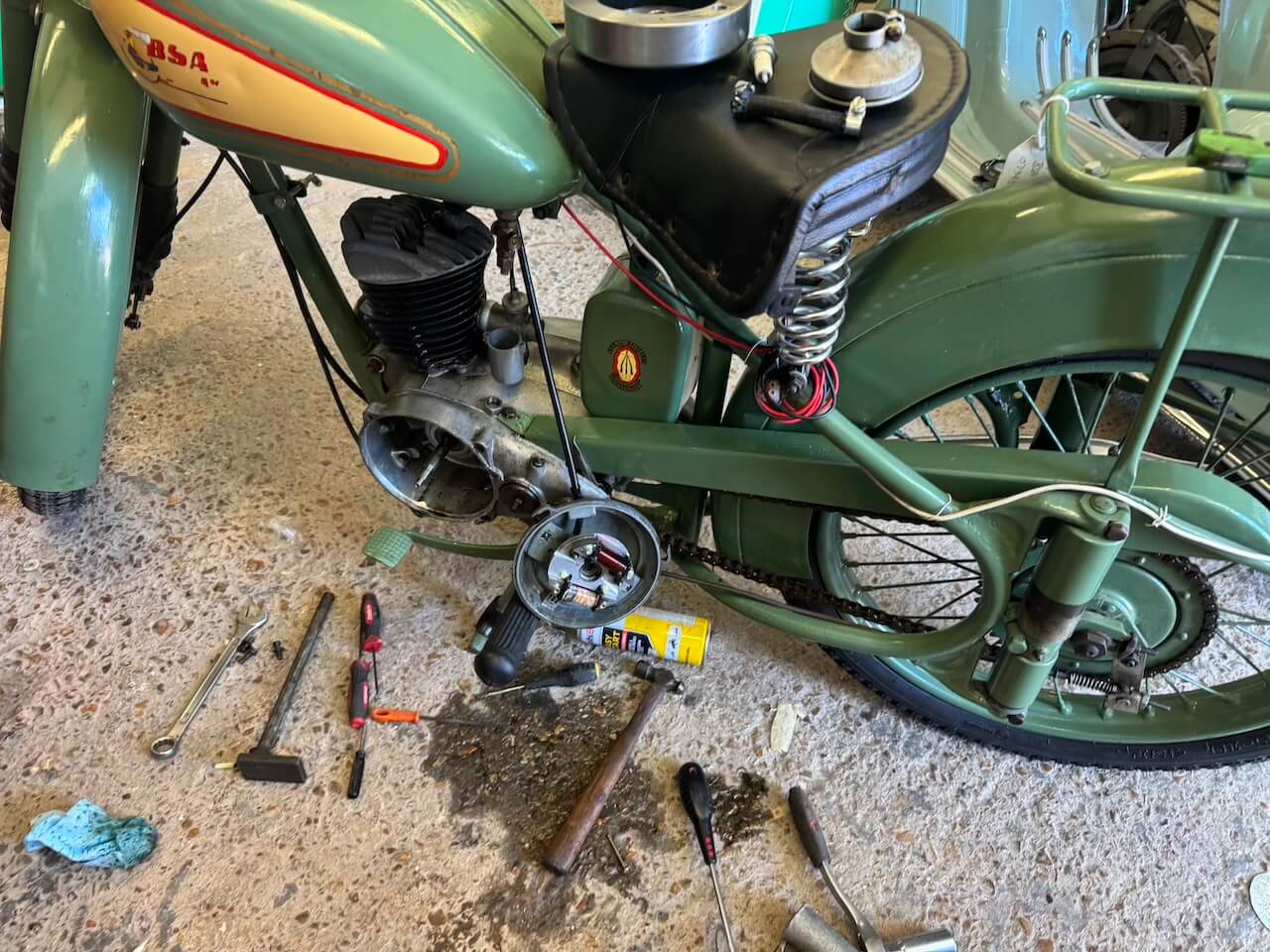
The BSA Bantam D1 is one of those machines that quietly shaped post-war Britain. Launched in 1948, the Bantam wasn’t about speed or prestige. It was about mobility. Cheap to buy, cheap to run, and simple enough to be maintained at home with a basic toolkit, it put two wheels within reach of thousands of people who had never owned a vehicle before.
By the time the D1 appeared in the early 1950s, the Bantam had already proven itself. A 125cc two-stroke single, derived from pre-war German designs, it produced modest power but delivered it reliably. In practice, these bikes were used hard. Commuting, deliveries, weekend errands, often year-round and in all weather. That working-life history is still written into many surviving examples today.
This particular 1951 Bantam D1 is in for mechanical work rather than cosmetic restoration, with an engine overhaul currently underway. From the outside, small two-strokes can look deceptively simple. Most people don’t realise how much wear can build up internally over decades of use, especially on engines that may have seen mixed-quality oils, infrequent servicing, or long periods of standing.
At White’s Bodyworks, engine work on bikes like this starts with careful inspection rather than assumptions. With older engines, it’s rarely just one issue. We often see worn bearings, tired seals, ovalled bores, damaged threads and evidence of past repairs that were done to keep a bike running rather than to put it right.
In practice, an engine overhaul is about restoring proper tolerances and reliability, not chasing performance. Components are stripped, measured and assessed individually. Some parts can be reused with careful preparation, others need replacement or reconditioning. With a Bantam engine, attention to sealing surfaces, crank condition and correct assembly makes a huge difference to how the bike runs and how long it stays healthy afterwards.
Two-stroke engines are particularly sensitive to poor assembly. Air leaks, incorrect clearances or tired seals can quickly undo good work. That’s why patience matters. Rushing an overhaul almost always leads to repeat issues, something we see regularly when bikes arrive after previous “quick rebuilds”.
What’s important with a bike like the Bantam D1 is retaining its original character. These machines were never smooth or powerful by modern standards, but when set up properly they are eager, dependable and surprisingly usable. An engine overhaul done correctly brings back that easy starting, steady running and mechanical honesty that made the Bantam so popular in the first place.
Projects like this sit firmly in the mechanical, behind-the-scenes side of classic motorcycle work. There’s nothing flashy about it. No fresh paint or polished alloy to distract from the engineering underneath. But without solid mechanical foundations, cosmetic work is meaningless.
This Bantam D1 is a good example of why sympathetic mechanical work matters. Keeping a bike like this running as intended preserves a small but important piece of British motoring history, not by reinventing it, but by understanding how it was built and giving it the care it needs to keep going.